

Beyond Water: How the Lower Subansiri Dam Is Interrupting an Unseen River Economy

DHEMAJI, July 1, 2026 — For nearly two decades, the Lower Subansiri Hydroelectric Project has been debated through the language of megawatts, dam safety, earthquakes, floods, environmental flows and downstream impacts. Engineers, scientists, governments and civil society have all contributed to this discussion. Yet, amid these important debates, one simple question has remained almost invisible: What happens when a river can no longer deliver its forest products downstream?
Every monsoon, the Subansiri carries far more than water. Rising in the eastern Himalaya, it transports sediments that build floodplains, nutrients that sustain ecosystems, fish that support livelihoods, seeds that regenerate riverine forests, and thousands of logs and driftwood produced by landslides, bank erosion and natural tree fall. For centuries, this movement connected mountain forest products with the plains of Assam.
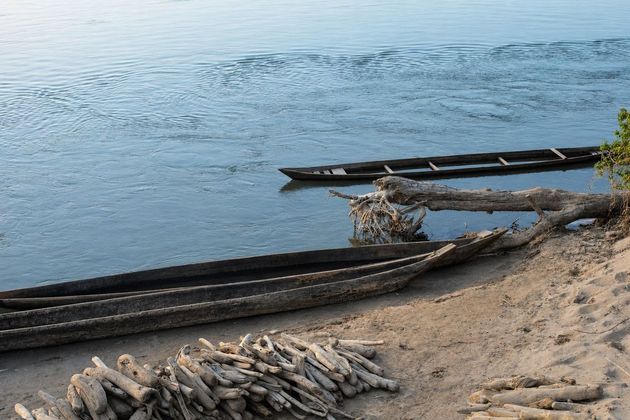
For generations, families living along the Subansiri and later the Brahmaputra understood this cycle. Every flood season, people waited by the river, not only to watch the water but also to see what the river might bring. Driftwood was never treated as waste. It became beams for flood-damaged houses, country boats, fences, fuelwood and, for many households, an important source of seasonal income. No government scheme created this livelihood, no department managed it, and no policy recognised it. The river itself sustained it.
Today, the river still carries the wood. Only the river can no longer deliver it.
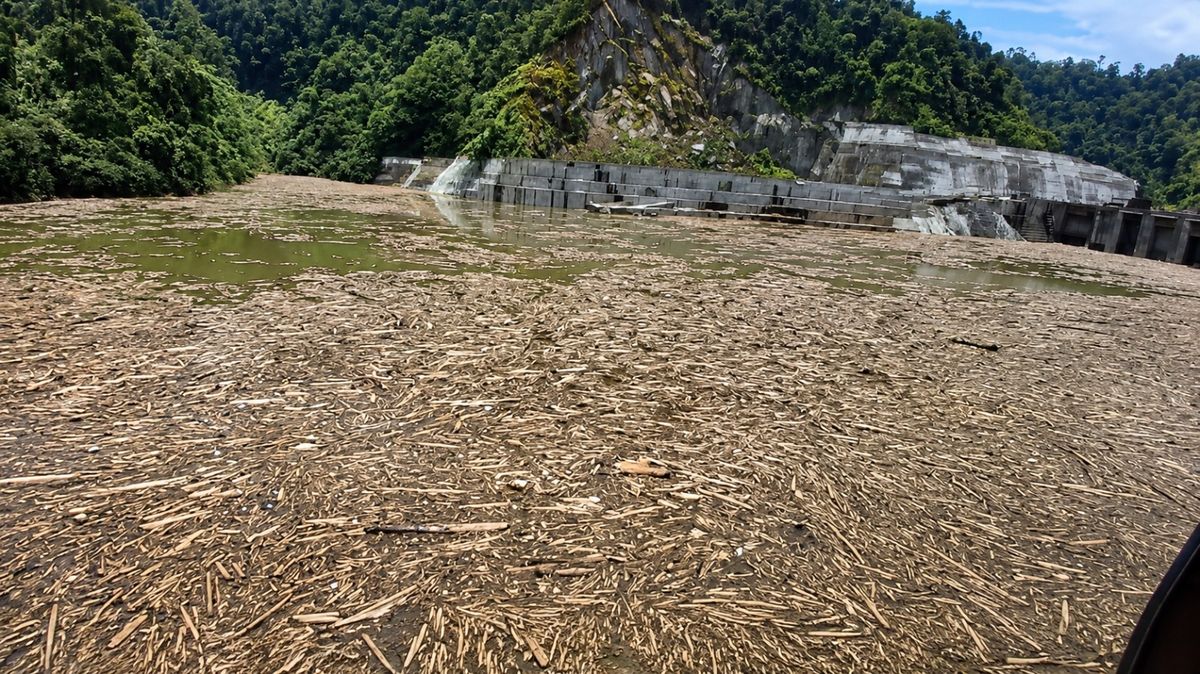
Recent photographs and videos from the Lower Subansiri reservoir show vast accumulations of floating logs trapped behind the dam. To engineers, these are operational challenges that must be managed to protect spillways and turbines. From the perspective of river ecology, however, they represent an interrupted natural process. The forests continue to send their trees. The mountains continue to produce landslides. Nature has not changed. Only the journey now ends at a concrete wall.
There is no official estimate of the driftwood trapped behind the Lower Subansiri reservoir. Yet a simple calculation suggests the scale of the issue. If the floating accumulation extends over nearly one square kilometre, and only 5–15% of that surface is actually occupied by logs with an average floating thickness of 20–50 cm, the reservoir could be holding approximately 10,000–75,000 cubic metres of driftwood—roughly 3.5–26 lakh cubic feet. Even at a conservative mixed market value, this represents an indicative resource worth ₹20 crore to over ₹100 crore. These are not official figures but transparent estimates intended to illustrate the possible magnitude of the resource. A scientific assessment using drone surveys, satellite imagery, field measurements and species-wise inventories is needed to determine the actual quantity and value. In the absence of such data, it is still evident that what accumulates behind the reservoir is a form of river-borne resource that once supported livelihoods downstream.
The issue extends far beyond economics. Around the world, river scientists recognise large woody debris as an essential component of healthy rivers. Logs slow water, trap sediment, create habitat for fish, store carbon and support biodiversity. Reservoir operators in countries such as Canada and Japan routinely remove floating timber to protect hydropower infrastructure because they know mountain rivers will continue carrying wood every monsoon. India has made important progress in recognising environmental flows, catchment treatment and biodiversity conservation, yet the continuous movement of woody biomass through rivers remains largely absent from environmental assessments and reservoir management.
Perhaps it is time to broaden our understanding of river continuity. Environmental flow taught us that a river requires water to remain alive. The next step may be to recognise that rivers also transport biomass as part of their ecological identity. This does not mean releasing every log downstream without assessment. It means measuring, understanding and managing woody biomass as an ecological process rather than dismissing it solely as operational waste.
The Lower Subansiri Project presents an opportunity to lead this conversation. A transparent inventory of reservoir biomass, annual monitoring, scientific assessment of species and carbon storage, and documentation of downstream dependence on river-borne timber would generate knowledge that benefits not only this project but future hydropower developments across the Himalayan region. It would also answer simple but important questions. How much woody biomass enters the reservoir every year? How much is removed? What happens to the recovered timber? Could part of it, subject to law and safety, contribute once again to downstream communities?
This is not an argument against hydropower. India needs energy, and hydropower will remain an important part of that future. But sustainable development must continually learn from the landscapes it transforms. Every generation expands the questions asked of rivers. Half a century ago, environmental flow received little attention. Today it is recognised as fundamental to responsible river management. The floating forests behind the Lower Subansiri reservoir may now be asking us another question: what else have we failed to count when we calculate the costs and benefits of a dam?
The Subansiri still begins the same journey every monsoon. Perhaps the question before us is not whether the river has changed. The question is whether we have yet learned to see everything the river has always carried.
Comments (0)
No comments yet. Be the first to share your thoughts.
Leave a Comment