
Skip to content Skip to navigation

Can BNP’s Tarique Rahman regime in Dhaka turn friendly to India !
As Bangladesh has constituted a new government under the leadership of  Bangladesh Nationalist Party (BNP) after a largely fair & peaceful national election on 12 February 2026, the people of eastern India (the region virtually embraces the poverty stricken country except a few kilometers in Myanmar and the Bay of Bengal)  hope for a progressive regime in Dhaka enjoying political stability and pursuing economic developments to over 170 million people in the south Asian nation. The Muslim majority country continues to grow as a headache for the north-eastern states, more precisely Assam, for at least two  reasons namely unabated influx of migrants and regional security concerns affecting millions of indigenous families in their homeland.

The region’s land connectivity with the rest of India is often picked up by a section of motivated Bangladeshi elements mentioning the challenges surrounding the Siliguri corridor (popularly known as chicken’s neck). Some of them even fantasize incorporating a large part of eastern Bharat to establish a greater Banglasthan. They convincingly argue,  an affluent nation should have a sea, a fertile valley with water bodies  and also a range of mountains, eventually indicating parts of Bhutan and Tibet too in their day-dream. Many  others strongly believe that Bangladesh, which nurtures a single linguistic identity (Bengali),  should now attain mono religion (read Islam) characteristics.

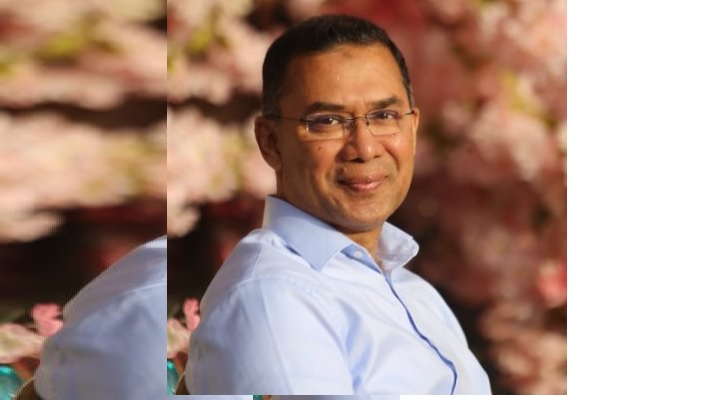
The election in a festive mood, otherwise not witnessed in Bangladesh, recorded around 60 percent voters’ turn out giving the BNP a whopping 212 seats in the 300-member Parliament (another 50 women members will be added to the Jatiya Sansad). Sixty years old Tarique Rahman, son of former Prime Minister Khaleda Zia and former President Ziaur Rahman, led the mainstream party in the electoral battles with no instigating anti-India rhetoric, which is understood as a common tactic to gain instant popularity among the Bangladeshi nationals.  Even after taking oath as the new premier, Rahman remained cool and overviewed holistic relations with the neighbouring countries, including India.

The popular anti-India speechifying got momentum after the ousted premier Sheikh Hasina took shelter in New Delhi, where she along with thousands of her party (Awami League) leaders continue to seek political asylum since her sudden departure on 5 August 2024. The interim government, formed under leadership of Nobel laureate Dr Muhammad Yunus, repeatedly asked for Hasina’s extradition, as she faces death sentence by a Bangladeshi tribunal, but generating no positive responses from India. PM Rahman, here also, avoided any aggressive comments against Hasina, who termed the 13th Jatiya Sansad as a farce, only pointing out that her repatriation should be addressed with legal initiatives.

When Bangladesh attracted international media attention with a series of atrocities on religious minority families in recent years, four non-Muslim candidates including two Hindus (namely Goyeshwar Chandra Roy and Nitai Roy Chowdhury) could emerge victorious in the last election. Nominated by the BNP, both defeated Jamaat candidates. Two other winning candidates from minority communities namely Saching Pru and Dipen Dewan were also nominated by the BNP. PM Rahman also inducted Roy Chowdhury and Dewan in his ministry. Needless to mention, the Hindus constitute a dwindling population of around 13 million (only 8% of populace ) in the country, whereas during the partition they had over 22 % of the  population.

Prime Minister Narendra Modi  promptly congratulated the BNP leadership for the decisive victory in polls. Modi became the first global leader to call Tarique Rahman and expressed interest in working with Dhaka for mutual benefits to both the neighbouring countries. The  BNP leadership promptly  acknowledged Modi’s gesture and stated that Dhaka looks forward to engaging constructively with New Delhi to advance a multifaceted relationship, guided by mutual respect, sensitivity to each other’s concerns and a shared commitment to peace, stability and prosperity in the entire region. Later Modi congratulated PM Rahman for the responsibility and even invited him along with family members to visit India at a mutually convenient time. Though could not respond to the BNP chief’s invitation to attend his  swearing-in ceremony on 17 February, Modi assigned  Lok Sabha speaker Om Birla to represent India in the auspicious ceremony held at the southern courtyard of Jatiya Sansad Bhawan in Dhaka.

Earlier, in his last televised address to the nation as the caretaker government’s chief adviser  Dr Yunus described the election ‘not merely as a power transfer but the beginning of a new journey for Bangladesh’s democracy’. The globally acclaimed microcredit initiator and social business promoter reminded the countrymen that the interim regime started working from minus (not even zero), as the poverty stricken country was made rubble by the former ruler (read Hasina). The reputed economics professor reiterated his emphasis on the enormous opportunities for Bangladesh with a potential growth of regional cooperation with Nepal, Bhutan and north-eastern Indian States. He concluded by appealing to the Bangladeshis, along with political leaders, to uphold and strengthen the  momentum for peace, progress and reforms with unwavering unity in the coming days.

But concerns for India in general and Assam in particular remain as Bangladesh Jamaat-e-Islami, an Islamist party that opposed the1971 liberation movement taking side of the western Pakistan, has emerged as the main opposition party in Jatiya Sansad for the first time in the  history of Bangladesh. The Jamaat guided an alliance of 11 parties to win  77 seats, where the Shafiqur Rahman-led party alone won in 68 constituencies, amazingly in most of West Bengal bordering constituencies. On the other hand, the  newly surfaced political party, National Citizen Party (which was formed by the students, who orchestrated the July-August 2024 uprising to topple Hasina’s government in Dhaka) had joined hands with the Jamaat in electoral battles  and won six seats. The political observers believe that a potential threat is looming at large for the landlocked Indian region which needs to be addressed efficiently by New Delhi after recalibrating bilateral ties with the troubled neighbour!

Add new comment

Other Contents by Author

Hyderabad: The national executive committee meeting of Indian Journalists Union (IJU), which concluded on Sunday in the capital city of Telangana, discussed various burning issues concerning the practitioners of journalism across India and emphasized on effective safety & security to journalists, reforms in Press Council of India (PCI) and basic minimum facilities to the media fraternity sustaining the spirit under freedom of the press to serve the largest democracy on the globe. Chaired by IJU president K Sreenivas Reddy, the two-day meeting held at Tourism Plaza in Begumpet locality expressed serious concern over killings of journalists by anti-social elements and filing of cases...
Guwahati: Interviewing a leader of an armed outfit in Myanmar (formerly known as Burma) and publishing its substance through a portal can be termed as a serious offence against the concerned editor. The fate of Khaing Mrat Kyaw, chief editor of Narinjara news portal, based in Sittwe of Rakhine (also known as Arakan) province in western Myanmar indicates the state of media’s freedom in the southeast Asian country. While the world is fighting against Covid-19 pandemic with over a hundred thousand casualties, the Myanmar authorities have framed charges of glorifying terrorism against the editor for uploading an interview with Khaing Thu Ka, spokesperson of Arakan Army, an ethnic revolutionary...
Amidst myriad devastation created by the novel corona virus around the world, news industries might learn to survive with regained credibility, continued authenticity and most sought after accountability in the post Covid-19 pandemic era. Earlier if these principles were necessary for the mainstream media, now it becomes an utmost priority for its survival. Besides the news outlets, working journalists will also face the same heat.  As millions of people are infected with the deadly virus with thousands of casualties across the globe, once a vibrant media fraternity finds itself in an awkward situation as they start losing their readers, viewers, appreciators along with the...
Guwahati: City-based Dispur Hospitals in association with ‘The Heart’, a non-government organization, have organized an awareness rally on the occasion of World Heart Day on 29 September in the morning hours on streets of the pre-historic city, said the organisers in a press meet held in Guwahati Press Club on Saturday. Created by the World Heart Federation, the heart day updates people around the globe that the cardiovascular disease, including heart disease & stroke, remains the leading cause of human death. Moreover it highlights the probable actions for individuals to prevent and control the disease. “Over 17.9 million people die from CVDs worldwide every year and according to...
Dharamshala: Indian supporters for a free Tibet have urged the Union government in New Delhi to confer Bharat Ratna, the country’s highest civilian honour, on the Tibetan spiritual leader His Holiness the 14th Dalai Lama for his immense contributions in creating goodwill for India in the last six decades. In a declaration, adopted in the 6th All India Tibet Support Groups’ Conference held on 15 and 16 June in Dharamshala township of Himachal Pradesh under the chairmanship of Rinchin Khandu Khrimey, national convener of Core Group for Tibetan Cause (CGTC), it was accomplished that the Nobel laureate continues to be a holy ambassador of Indian culture enriched with non-violence, compassion...
Guwahati: City based Barthakur Clinic Hospital conducted a brief media OPD clinic at Guwahati Press Club on Saturday (23 February 2019), where nurses Lucy L Chongloi and Kapila Lama Borah checked blood pressures of the participants. It may be mentioned that the participating scribes have maintained the readings of normal blood pressure in the camp.
“In a single generation, Singapore became a first world country. It is now one of the wealthiest nations in the world while maintaining social harmony and remaining free of corruption and crime,” so said senior journalist Hiren Phukan, presently retired after a successful career in the island nation. He was speaking to scribes in the city on Friday through video conferencing from Singapore as part of Guwahati Press Club’s ‘Meet the Press’ programme. Recalling Singapore’s trajectory after independence from Malyasia, Phukan dwelt on the export-led industrialization rather than import substitution that drew multi-national companies to its shores. “The country was made attractive for foreign...
A senior Assamese journalist, who has worked for many years in Singapore will interact with the city based scribes on next Friday (25 January 2019). Hiren Phukan, now settled in the port city State, will answer queries from the members of Guwahati Press Club (GPC) through the video conferencing facility in the program starting at 3 pm. Hails from Uzanbajar locality of Guwahati, Phukan used to work for The Straits Times, Singapore's leading English language daily till 2005. Earlier he was associated with The New Straits Times, Malaysia’s premier daily. After two years he left Kuala Lumpur for Singapore in 1982 and since then he is living there. Prior to it, Phukan worked for The Statesman...
Narayana Super-Specialty Hospital, Amingaon (north Guwahati) will conduct a free health camp for the member-journalists of Guwahati Press Club (GPC) along with their families on Saturday (12 January 2019). The daylong camp will be started by 10 am at newly launched Narayana Superspeciality Clinic (Near Ulubari KFC, Kacharibasti, Guwahati, helpline number- 8011242424) and get over by 2 pm. The participants will be offered the facility of free RBS, ECG and Echo (if advised ) test and subsequent doctor consultations at the centre. One consultant relating to medicine will also be present at the camp. The interested member-journalists are requested to arrive at the venue with the government...
Journalists’ Forum Assam (JFA), while expressing serious concern over repeated attacks on working journalists across India, insisted on honoring media wisdom by both media and non-media entities. The scribe’s body reiterated that as the journalists enjoy the right to ask questions for information, the others should have the opportunity to criticize the media persons as well. It may be noted that following the Prime Minister Narendra Modi's long interview by Smita Prakash, editor of Reuters' partner Asian News International (ANI), which was subsequently telecast by various news channels on 1 January 2019, criticisms erupted against the interviewer that she left many hard issues from...