
Skip to content Skip to navigation

Can BNP’s Tarique Rahman regime in Dhaka turn friendly to India !

As Bangladesh has constituted a new government under the leadership of  Bangladesh Nationalist Party (BNP) after a largely fair & peaceful national election on 12 February 2026, the people of eastern India (the region virtually embraces the poverty stricken country except a few kilometers in Myanmar and the Bay of Bengal)  hope for a progressive regime in Dhaka enjoying political stability and pursuing economic developments to over 170 million people in the south Asian nation. The Muslim majority country continues to grow as a headache for the north-eastern states, more precisely Assam, for at least two  reasons namely unabated influx of migrants and regional security concerns affecting millions of indigenous families in their homeland.

The region’s land connectivity with the rest of India is often picked up by a section of motivated Bangladeshi elements mentioning the challenges surrounding the Siliguri corridor (popularly known as chicken’s neck). Some of them even fantasize incorporating a large part of eastern Bharat to establish a greater Banglasthan. They convincingly argue,  an affluent nation should have a sea, a fertile valley with water bodies  and also a range of mountains, eventually indicating parts of Bhutan and Tibet too in their day-dream. Many  others strongly believe that Bangladesh, which nurtures a single linguistic identity (Bengali),  should now attain mono religion (read Islam) characteristics.

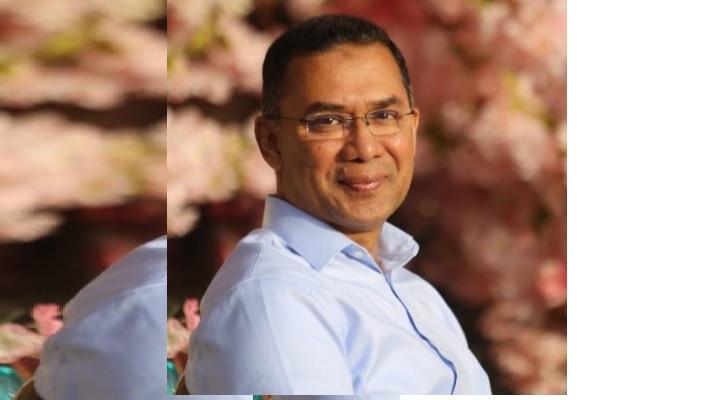
The election in a festive mood, otherwise not witnessed in Bangladesh, recorded around 60 percent voters’ turn out giving the BNP a whopping 212 seats in the 300-member Parliament (another 50 women members will be added to the Jatiya Sansad). Sixty years old Tarique Rahman, son of former Prime Minister Khaleda Zia and former President Ziaur Rahman, led the mainstream party in the electoral battles with no instigating anti-India rhetoric, which is understood as a common tactic to gain instant popularity among the Bangladeshi nationals.  Even after taking oath as the new premier, Rahman remained cool and overviewed holistic relations with the neighbouring countries, including India.

The popular anti-India speechifying got momentum after the ousted premier Sheikh Hasina took shelter in New Delhi, where she along with thousands of her party (Awami League) leaders continue to seek political asylum since her sudden departure on 5 August 2024. The interim government, formed under leadership of Nobel laureate Dr Muhammad Yunus, repeatedly asked for Hasina’s extradition, as she faces death sentence by a Bangladeshi tribunal, but generating no positive responses from India. PM Rahman, here also, avoided any aggressive comments against Hasina, who termed the 13th Jatiya Sansad as a farce, only pointing out that her repatriation should be addressed with legal initiatives.

When Bangladesh attracted international media attention with a series of atrocities on religious minority families in recent years, four non-Muslim candidates including two Hindus (namely Goyeshwar Chandra Roy and Nitai Roy Chowdhury) could emerge victorious in the last election. Nominated by the BNP, both defeated Jamaat candidates. Two other winning candidates from minority communities namely Saching Pru and Dipen Dewan were also nominated by the BNP. PM Rahman also inducted Roy Chowdhury and Dewan in his ministry. Needless to mention, the Hindus constitute a dwindling population of around 13 million (only 8% of populace ) in the country, whereas during the partition they had over 22 % of the  population.

Prime Minister Narendra Modi  promptly congratulated the BNP leadership for the decisive victory in polls. Modi became the first global leader to call Tarique Rahman and expressed interest in working with Dhaka for mutual benefits to both the neighbouring countries. The  BNP leadership promptly  acknowledged Modi’s gesture and stated that Dhaka looks forward to engaging constructively with New Delhi to advance a multifaceted relationship, guided by mutual respect, sensitivity to each other’s concerns and a shared commitment to peace, stability and prosperity in the entire region. Later Modi congratulated PM Rahman for the responsibility and even invited him along with family members to visit India at a mutually convenient time. Though could not respond to the BNP chief’s invitation to attend his  swearing-in ceremony on 17 February, Modi assigned  Lok Sabha speaker Om Birla to represent India in the auspicious ceremony held at the southern courtyard of Jatiya Sansad Bhawan in Dhaka.

Earlier, in his last televised address to the nation as the caretaker government’s chief adviser  Dr Yunus described the election ‘not merely as a power transfer but the beginning of a new journey for Bangladesh’s democracy’. The globally acclaimed microcredit initiator and social business promoter reminded the countrymen that the interim regime started working from minus (not even zero), as the poverty stricken country was made rubble by the former ruler (read Hasina). The reputed economics professor reiterated his emphasis on the enormous opportunities for Bangladesh with a potential growth of regional cooperation with Nepal, Bhutan and north-eastern Indian States. He concluded by appealing to the Bangladeshis, along with political leaders, to uphold and strengthen the  momentum for peace, progress and reforms with unwavering unity in the coming days.

But concerns for India in general and Assam in particular remain as Bangladesh Jamaat-e-Islami, an Islamist party that opposed the1971 liberation movement taking side of the western Pakistan, has emerged as the main opposition party in Jatiya Sansad for the first time in the  history of Bangladesh. The Jamaat guided an alliance of 11 parties to win  77 seats, where the Shafiqur Rahman-led party alone won in 68 constituencies, amazingly in most of West Bengal bordering constituencies. On the other hand, the  newly surfaced political party, National Citizen Party (which was formed by the students, who orchestrated the July-August 2024 uprising to topple Hasina’s government in Dhaka) had joined hands with the Jamaat in electoral battles  and won six seats. The political observers believe that a potential threat is looming at large for the landlocked Indian region which needs to be addressed efficiently by New Delhi after recalibrating bilateral ties with the troubled neighbour!

Add new comment

Other Contents by Author

On the midnight of August 31, 2019, an extraordinary bureaucrat unveiled the contentious National Register of Citizens (NRC) in Assam, amidst a large gathering of eager media personnel in Guwahati. Prateek Hajela, the then State NRC coordinator, not only explained various features of the NRC to the assembled reporters but also declared the supplementary list as the definitive one. Some television journalists, excited by the so-called "extraordinary work" of the technocrat-turned-IAS officer, went as far as to applaud Hajela as a superhero. However, the ground reality paints a different picture. The Assam NRC has never been endorsed—nor is it today—by the Registrar General of India (RGI...
It’s shocking to report that a number of Guwahati-based scribes and RTI (right to information) activists have been facing interrogation and even arrest by Assam chief minister’s special vigilance cell following the allegations of Sewali Devi Sharma, the prime accused in Rs 105 crore State council of educational research and training (SCERT) scam, as being blackmailers to her in different occasions. The arrestees include a female reporter (identified as Pujamoni Das alias Honey Kashyap, who reportedly took a large volume of money from Ms Sharma) along with a satellite news channel reporter named Bhaskarjoti Hazarika.  RTI activists namely Rabijit Gogoi (who pretended to be a...
Can we imagine a world of zero poverty, zero unemployment, and zero carbon emissions with a new approach in post-corona economics! Ask Nobel laureate Professor Muhammad Yunus and he will answer in the affirmative. The university professor turned revolutionary banker believes that the human race should not only dream about a safer world by reducing global warming, wealth concentration and unemployment, but also work in that direction with personal and collective capacities. In his latest book titled ‘A World of Three Zeros’, Prof Yunus proposes a new economic system focusing on every human being as an entrepreneur in the making. He believes that humans are not born to work only for...
Guwahati: Assam is all set to host first sustainable financial working group (SFWG) meeting and Youth 20 inception meeting as part of India's year-long G20 presidency, where it is meticulously chalked out various tour programs that would help in promoting the State’s rich biodiversity and socio-cultural heritage in international arena. The authorities have completed the preparation to welcome the foreign delegates to the State. Guwahati is adorned with digital wall painting, thematic gates, flags of G 20 countries, LED cut-outs, standees, hoarding, etc as part of branding and beautification. The government has also completed the arrangement for the visiting delegates to places of...
Guwahati: India observes National Press Day on 16 November with an aim to pay tributes to everyone who contributed to the growth of print media along with its mentor & watchdog the Press Council of India (PCI). Moreover, it’s also an occasion for the practicing media persons to introspect seriously over their noble profession where it has been heading in the post-Covid-19 pandemic era. Since its inception and functioning, the PCI continues to symbolize a free and responsible press in the largest democracy in the world. Among all press or media councils, functioning in various countries, the PCI is recognised as a unique entity that exercises authority over the media and also safeguards...
Participating in a debate on satellite television or digital channels needs some homeworks to make the deliberations short and clear. Unless you face an arrogant anchor and unruly participants, the experience in talk shows normally emerges as an intriguing one. It happened to me, as I had recently participated in a digital media discussion on the pertinent issue of National Register of Citizens  (NRC) in Assam, where the prime guest was none other than the immediate past State NRC coordinator Hitesh Dev Sarma. The talk show host Dikshit Sharma put the questions in a clever way so that the issue comes alive and my part was just to interpret Dev Sarma’s version for clarity to the valued...
Guwahati: It was an amazing experience to attend the foundation day of a 25 year old press club in central Assam on a lazy Sunday, where a number of senior citizens along with rural scribes and novice journalists were waiting to listen to my speech. It’s easier to address a journalist’s meet- where we can discuss many issues with liberties, but while the audience includes respected senior citizens and young people, it becomes a difficult task to speak to them together. First, the question that arises, how much should I highlight the eroding credibility of the mainstream media around India in general and Assam in particular and secondly what may be the role of social (alternate/digital)...
Guwahati: A year-long celebration of 100 years of sports journalism in Assam begins coinciding on the day while the first ever news related to a football competition is published in Asomiya (a weekly news magazine mentored by Chandra Kumar Agarwala) on 1  July 1923. Assam Sports Journalists Association (ASJA), which is affiliated with the Sports Journalists Federation of India (a national affiliate of the International Sports Press Association), has taken the lead in celebrating the occasion that will culminate on 1  July next year. On Saturday, flags for ASJA and the centenary celebration were hoisted by ASJA’s founder president Balendra Mohan Chakraborty and his successor...
Reactions from the public (sensitive readers) against a news item in any newspaper (also news channel) are usual in India, but outrages against the mainstream media outlets in digital platforms for not covering a particular issue is definitely an unusual phenomenon. The north-eastern state of Assam witnessed such public fury against some of the editor-journalists for avoiding press conferences by opposition political parties where they targeted the state chief minister for his family’s alleged land scam. The organized public uproar in the alternate media was so intense that the celebrity editor-journalists of Assam did not dare to clarify their positions. They preferred to avoid the...
Hyderabad: The Indian Journalists Union (IJU) has strongly condemned the incident of assault on a Manipur journalist and urged the state chief minister, N. Biren Singh, to book the culprits under the law. The National Union of Subscribes also wished for an early recovery of Elangbam Rameshwar, who works as a Thoubal correspondent for the Naharolgi Thoudang regional daily newspaper, which is published from Imphal. Local media hinted that the handiwork was masterminded by some Congress workers in the Thoubal locality of the north-eastern state, who were attacked by a group of 20 to 25 masked men in the morning hours on 24 October. The rural reporter faced assault at his residence in the...