Skip to content Skip to navigation

Can BNP’s Tarique Rahman regime in Dhaka turn friendly to India !

As Bangladesh has constituted a new government under the leadership of  Bangladesh Nationalist Party (BNP) after a largely fair & peaceful national election on 12 February 2026, the people of eastern India (the region virtually embraces the poverty stricken country except a few kilometers in Myanmar and the Bay of Bengal)  hope for a progressive regime in Dhaka enjoying political stability and pursuing economic developments to over 170 million people in the south Asian nation. The Muslim majority country continues to grow as a headache for the north-eastern states, more precisely Assam, for at least two  reasons namely unabated influx of migrants and regional security concerns affecting millions of indigenous families in their homeland.

The region’s land connectivity with the rest of India is often picked up by a section of motivated Bangladeshi elements mentioning the challenges surrounding the Siliguri corridor (popularly known as chicken’s neck). Some of them even fantasize incorporating a large part of eastern Bharat to establish a greater Banglasthan. They convincingly argue,  an affluent nation should have a sea, a fertile valley with water bodies  and also a range of mountains, eventually indicating parts of Bhutan and Tibet too in their day-dream. Many  others strongly believe that Bangladesh, which nurtures a single linguistic identity (Bengali),  should now attain mono religion (read Islam) characteristics.

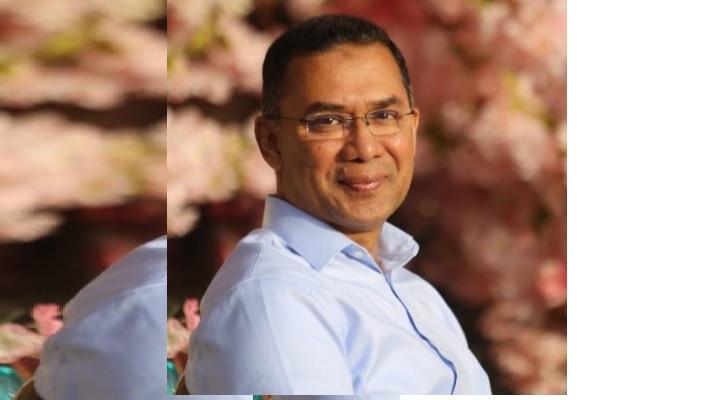
The election in a festive mood, otherwise not witnessed in Bangladesh, recorded around 60 percent voters’ turn out giving the BNP a whopping 212 seats in the 300-member Parliament (another 50 women members will be added to the Jatiya Sansad). Sixty years old Tarique Rahman, son of former Prime Minister Khaleda Zia and former President Ziaur Rahman, led the mainstream party in the electoral battles with no instigating anti-India rhetoric, which is understood as a common tactic to gain instant popularity among the Bangladeshi nationals.  Even after taking oath as the new premier, Rahman remained cool and overviewed holistic relations with the neighbouring countries, including India.

The popular anti-India speechifying got momentum after the ousted premier Sheikh Hasina took shelter in New Delhi, where she along with thousands of her party (Awami League) leaders continue to seek political asylum since her sudden departure on 5 August 2024. The interim government, formed under leadership of Nobel laureate Dr Muhammad Yunus, repeatedly asked for Hasina’s extradition, as she faces death sentence by a Bangladeshi tribunal, but generating no positive responses from India. PM Rahman, here also, avoided any aggressive comments against Hasina, who termed the 13th Jatiya Sansad as a farce, only pointing out that her repatriation should be addressed with legal initiatives.

When Bangladesh attracted international media attention with a series of atrocities on religious minority families in recent years, four non-Muslim candidates including two Hindus (namely Goyeshwar Chandra Roy and Nitai Roy Chowdhury) could emerge victorious in the last election. Nominated by the BNP, both defeated Jamaat candidates. Two other winning candidates from minority communities namely Saching Pru and Dipen Dewan were also nominated by the BNP. PM Rahman also inducted Roy Chowdhury and Dewan in his ministry. Needless to mention, the Hindus constitute a dwindling population of around 13 million (only 8% of populace ) in the country, whereas during the partition they had over 22 % of the  population.

Prime Minister Narendra Modi  promptly congratulated the BNP leadership for the decisive victory in polls. Modi became the first global leader to call Tarique Rahman and expressed interest in working with Dhaka for mutual benefits to both the neighbouring countries. The  BNP leadership promptly  acknowledged Modi’s gesture and stated that Dhaka looks forward to engaging constructively with New Delhi to advance a multifaceted relationship, guided by mutual respect, sensitivity to each other’s concerns and a shared commitment to peace, stability and prosperity in the entire region. Later Modi congratulated PM Rahman for the responsibility and even invited him along with family members to visit India at a mutually convenient time. Though could not respond to the BNP chief’s invitation to attend his  swearing-in ceremony on 17 February, Modi assigned  Lok Sabha speaker Om Birla to represent India in the auspicious ceremony held at the southern courtyard of Jatiya Sansad Bhawan in Dhaka.

Earlier, in his last televised address to the nation as the caretaker government’s chief adviser  Dr Yunus described the election ‘not merely as a power transfer but the beginning of a new journey for Bangladesh’s democracy’. The globally acclaimed microcredit initiator and social business promoter reminded the countrymen that the interim regime started working from minus (not even zero), as the poverty stricken country was made rubble by the former ruler (read Hasina). The reputed economics professor reiterated his emphasis on the enormous opportunities for Bangladesh with a potential growth of regional cooperation with Nepal, Bhutan and north-eastern Indian States. He concluded by appealing to the Bangladeshis, along with political leaders, to uphold and strengthen the  momentum for peace, progress and reforms with unwavering unity in the coming days.

But concerns for India in general and Assam in particular remain as Bangladesh Jamaat-e-Islami, an Islamist party that opposed the1971 liberation movement taking side of the western Pakistan, has emerged as the main opposition party in Jatiya Sansad for the first time in the  history of Bangladesh. The Jamaat guided an alliance of 11 parties to win  77 seats, where the Shafiqur Rahman-led party alone won in 68 constituencies, amazingly in most of West Bengal bordering constituencies. On the other hand, the  newly surfaced political party, National Citizen Party (which was formed by the students, who orchestrated the July-August 2024 uprising to topple Hasina’s government in Dhaka) had joined hands with the Jamaat in electoral battles  and won six seats. The political observers believe that a potential threat is looming at large for the landlocked Indian region which needs to be addressed efficiently by New Delhi after recalibrating bilateral ties with the troubled neighbour!

Add new comment

Other Contents by Author

Journalists’ Forum Assam (JFA), while expressing serious concern over repeated attacks on working journalists across India, insisted on honoring media wisdom by both media and non-media entities. The scribe’s body reiterated that as the journalists enjoy the right to ask questions for information, the others should have the opportunity to criticize the media persons as well. It may be noted that following the Prime Minister Narendra Modi's long interview by Smita Prakash, editor of Reuters' partner Asian News International (ANI), which was subsequently telecast by various news channels on 1 January 2019, criticisms erupted against the interviewer that she left many hard issues from...
Patriotic People’s Front Assam (PPFA) welcomes renaming of three Andaman & Nicobar islands after legendary freedom fighter Netaji Subhas Chandra Bose along with his magnificent legacy and it expresses happiness that the Patriot of Patriots has been duly honoured on 75th anniversary of Netaji’s declaration of the formation of Azad Hind government. Prime Minister Narendra Modi in his recent visit to Port Blair renamed the Ross island as Netaji Subhas Chandra Bose Dweep, Neil island as Shaheed Dweep and Havelock island as Swaraj Dweep. He also hoisted the 150-feet national flag at South Point of Port Blair, where Netaji Bose unfurled the Tricolour in 1943 as the head of provisional...
Guwahati: Thimphu based author-journalist Gopilal Acharya will interact with Guwahati scribes on Friday (21 December 2018), where the young writer is expected to speak on various socio-political and cultural issues of Bhutan. Author of Bhutanese Folk Tales, Dancing to Death, With a Stone in My Heart etc will address the member-journalists of Guwahati Press Club through video conferences from the Bhutanese capital city of Thimphu. Born in Gelephu of the Himalayan Shangri-La in 1978 and educated in Bhutan and Sweden, Gopilal regularly contributes for CNN, South Asian Monitor, Straits Times, Telegraph, Kuensel, Bhutan Times etc. The award winning journalist will highlight bilateral...
Guwahati: As India and Myanmar (formerly Burma) maintain a strong legacy of friendship, trust and cooperation for centuries, the southeast Asian nation expects an active role in diverse fields from New Delhi. But reasons, best known to the Indian government, visible efforts from New Delhi continue to be rare in contrast to hyper activism adopted by the Beijing based Chinese administration. Speaking to a group of scribes at Guwahati Press Club from Bogo near to Yangon on 7 December 2018 through video conferencing, Debbie Stothard, a journalist turned pro-democracy human rights activist, also pointed out the unusual delay in functioning of much hyped Kaladan multi-modal project that would...
Guwahati: Rise of Islamist extremism in Bangladesh is not only posing a serious threat to the Muslim dominated country, but also to its neighbouring north-eastern States of India along with West Bengal. Speaking to a group of scribes at Guwahati Press Club from Dhaka through internet on Friday, prominent Bangladeshi journalist Saleem Samad made this comment. An Ashoka Fellow and Hellman-Hammett Award recipient journalist also added that an upsurge of fundamentalist forces in Bangladesh poses serious threats not only to the religious minority communities there, but also to the secularists, intellectuals and other sects within the Muslim community. Samad narrated how atheist &...
Guwahati: The Apollo Hospitals Chennai will conduct two media OPD clinics at Guwahati Press Club on 22 September and 5 October next. Dr S Kannan (ENT/ Head & Neck Surgeon) will be available for free consultations to scribes on coming Saturday from 3 pm to 4.30 pm. The participants can get free consultations on throat problems, mouth ulcers, ear infections etc from the attending physician. On the other hand, Geriatrician Dr Rajendran Magesh will be available for consultations on general medical problems to the participants (who are above 40) in the second health camp on Friday between 5 pm and 7 pm at the press club premises. Organized under the series of ‘Evening with a Doctor’...
Guwahati: On the occasion of World Physiotherapy Day (8 September), a health camp for the benefit of member-journalists of Guwahati Press Club was organized on Saturday. Initiated by of Indian Association of Physiotherapists (Assam branch), Indian Association of Physiotherapists Women cell (Assam branch) and All Assam Physiotherapy Association, the camp was graced by Dr Chatrajit Das (PT), Dr Mayur Das (PT) and Dr Trishna Saikia Baruah (PT). They were assisted by Banashri Das (MPT), Dikshita Rabha (MPT), Bhargab Bhattacharya (MPT), Laizu Yeamin Lipa (MPT), Mathew Lalruatliana (MPT) and Karan Yangma (MPT). Till date, the press club health clinic has been supported by Down Town Hospitals,...
Guwahati: Most of the city based scribes need thorough eye check-ups as they constantly use digital screen for hours in a day. In a day long eye screening camp, organized EYE DOCTORS, a city based eye institute and surgery centre, at Guwahati Press Club on 7 July 2018 it was observed that half of the participants were in need of thorough check-up and necessary treatments. Senior eye surgeon Dr Bindu Singla Goel conducted the camp, where around 60 journalists participated and went with preliminary screening of their eyes. The practicing physician was assisted by health workers Afsana Khatun and Robita Roy. Few employees of Cipla and Alcon were also present to support the camp.
Guwahati As part of a wider initiative to help member-journalists add value to their professional experience, Guwahati Press Club has begun to screen award winning and critically acclaimed films and documentaries every week. On Friday (11 May), the non-verbal documentary ‘Glass’ was screened at the GPC auditorium. An Oscar-winning documentary made in 1958 by eminent European filmmaker Bert Haanstra, ‘Glass’ brilliantly contrasts glassblowing techniques used at the Royal Leerdam glass factory in Netherlands, with modern machines churning out glassware on industrial scale. The film captures the art of the glassblowers with great sensitivity, their marvelous craftsmanship imparting each...
Guwahati: Assam’s well known Dispur Hospital organizes a free lipid profile tests for the journalist-members of Guwahati Press Club starting on Monday (9 April). The series of camp will continue for five days till Friday at the press club premises where 20 blood samples will be taken every day (from 12 noon to 1 pm). It may be mentioned that the lipid profile (lipid panel) test includes various types of blood screenings to measure the level of cholesterol and triglycerides. The tests can identify certain genetic diseases and determine approximate risks for cardiovascular disease, certain forms of pancreatitis, and other related diseases. In case the number of participants increases (even...