
Skip to content Skip to navigation

Conclave on threats to wetland ecosystem held

“Conservation of wetlands plays a vital role in ecosystem and vegetation development. The wetlands of Kaziranga support spectacular concentration of wildlife like the Great One-horned Rhino, Water Buffalo, Eastern Swamp Deer and various species of migratory and resident birds, fishes and reptiles. Grave consequences for wildlife have been associated with shrinking of wetlands.” said Prasanna Baruah, senior scientific officer of Assam Remote Sensing Application Centre while speaking on the “status of wetlands in Kaziranga National Park: a geospatial analysis” during a conclave held in the Convention Centre of Kaziranga on Monday. “Erosion, siltation, shallowing of wetlands, invasion of tall grassland and reduction of wet short grass area have become major threats for Kaziranga,” he warned.

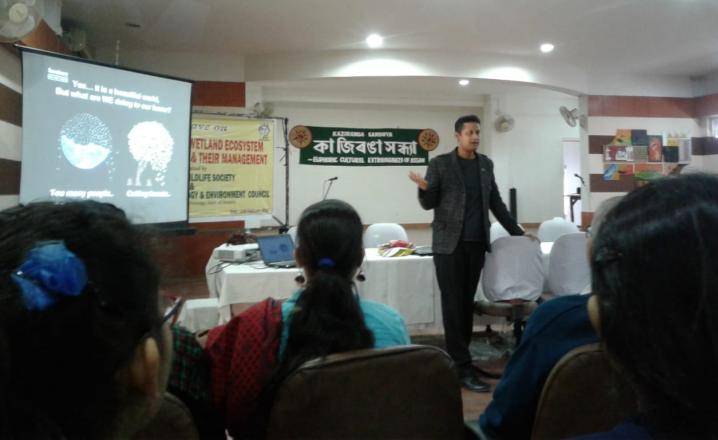
The conclave on “Climate Change threats on Wetland Ecosystem of Protected Areas & their Management” was organized by Kaziranga Wildlife Society and Assam Science Technology and Environment Council (ASTEC). 

“Wetland mapping is the first step to monitoring this important part of the ecosystem. Mapping of wetlands using geospatial tool, can be done accurately at minimal costs and manpower use. Monitoring at multiple spatial and temporal scales, support better understanding of the ecosystem for continuous assessment and analysis of future trends,” Baruah also added. 

The conclave on “Climate Change threats on Wetland Ecosystem of Protected Areas & their Management” was organized by Kaziranga Wildlife Society and Assam Science Technology and Environment Council (ASTEC). 
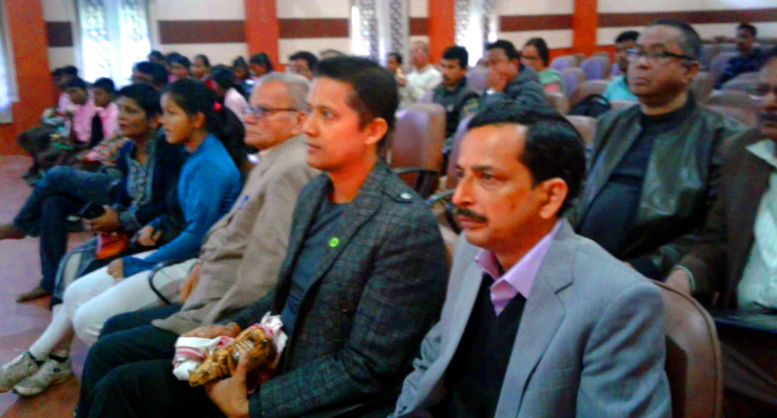
Dr Jaideep Baruah, Head, Environment Division of ASTEC in his opening remarks said that wetlands form a unique ecosystem. The role of wetlands is enormous in maintaining environmental quality, control of floods, ground water recharge and livelihood support. Wetlands provide water and habitat for a diverse range of plants and animals and therefore richest among all ecosystems from biodiversity point of view. He stressed on the need for identification and delineation of wetland areas and periodic monitoring of the physical status of the wetlands in protected areas.

Detailing the objectives of the conclave, Mubina Akhtar, secretary of Kaziranga Wildlife Society said-- “Climate change poses a threat to all ecosystems. The wetland ecosystem is the most vulnerable because wetlands are the least protected ecosystems. The New Wildlife Action Plan 2017-2031 (NWAP) of India sets out the framework for governmental intervention and management plans to be developed in the protected areas (PAs) in the coming 15 years prioritizing development and conservation goals. On the other hand, the thematic focus on climate change—an entirely a new approach in conservation discussions, would set the tone for research specific to climate change, including long-term monitoring and assessment of change in the distribution of vegetation types and ecosystems.” 
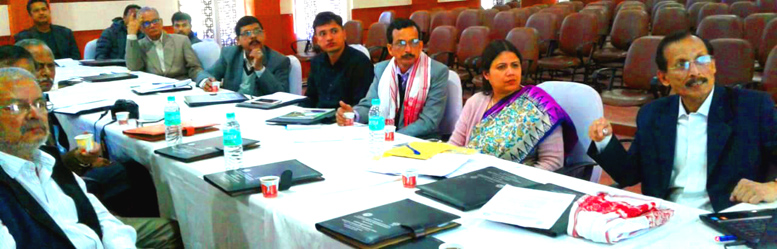
 “Kaziranga Wildlife Society now in its golden jubilee year and with the core objectives--to protect, preserve and propagate nature, wildlife and environment – has sought collaboration with the ASTE Council for a for exchange of scientific ideas on status of wetlands and threats of climate change on wetland ecosystem in protected areas and create a policy discourse between CSOs and government departments/agencies for effective management of wetland ecosystem in protected areas,” added Akhtar.

Opening the discussions, Dr Pradip Sharma, Associate Professor (Retd) Cotton University, gave out a presentation on the effect of climate change and wetland degradation in protected areas and showed the implications of climate change on the wetland ecosystem. Dr Sharma said that the total wetland area estimated in the state is 7, 64, 372 ha i.e. around 9.74% of total geographical area of the state and the number of wetlands having an area of more than 2.25 ha is 5,097. There are about 6,000 wetlands scattered in the Brahmaputra and the Barak valleys having an area of less than 2.25 ha. In addition, the state has several thousands of family owned small tanks. Besides providing water to the people of the nearby areas, these tanks can also be used for rearing fishes and raising plantation crops. Wetlands need to be protected for their unique biodiversity. If properly managed, the wetlands are going to be a source of immense wealth for this state leading also to enrichment of the quality of its environment,” Dr Sharma added.
Talking on the key issue on climate change effects on wetland ecosystem, Dr Sharma said that with increase in temperature evaporation also increases that leads to depletion of surface water level resulting in depletion of aquatic life and vegetation cover. He also blamed poor governance for loss of important wetlands in the state.

Haobam Suchitra Devi, Senior Scientist, North Eastern Space Applications Centre, Shillong  giving an analysis of land cover dynamics in Kaziranga National Park using geospatial technology, said that Bank erosion is the main cause for the loss in area in KNP and the Eastern range of the Park is the most affected one. The result also showed a gradual reduction in woodland till 1988 and again in increasing trend. Land cover in the Park is also very dynamic in nature. Wetlands have changed to grassland and woodland, grasslands to woodlands. Short grassland although occupy less area, is showing an increasing trend. Therefore, monitoring land cover is utmost priority for management of the park, the scientist warned.  

The Divisional Forest Officer of KNP, Rohini Ballav Saikia summarized the findings of the recent Waterfowl Survey in the water bodies of the Park taken up by the department last December. He hoped that future surveys would engage more participants especially from the student community in such surveys. 

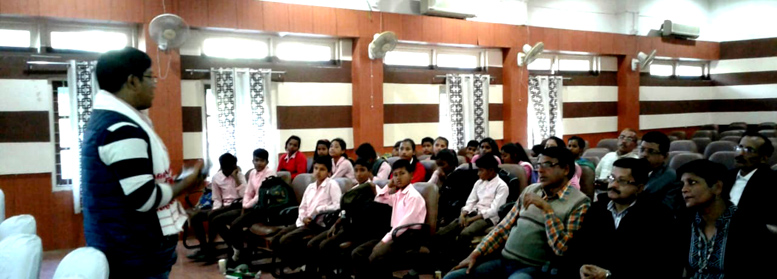
A film show on the great one-horned rhino was held for students in the post lunch session. Raj Phukan of Green Guard Nature Organization interacted with students with a slide show on climate change effects on our environment. Padum Borthakur, president Kaziranga Wildlife Society addressing the students said that the future of this earth depends on our young generation and each of the young people should become a foot soldier in the conservation movement. Arup Duarah, headmaster, Dholaguri ME School urged the students to be aware and remain vigilant of various environmental crimes happening around us. Dr Jaideep Baruah and Dr Pradip Sharma also interacted with students from Kaziranga National Park School, Vivekananda Kendriya Vidyalaya Golaghat and Dholaguri ME School.

Office-bearers and members of KWS—Sourav Mahanta, Chandan Gogoi, Ronjit Dohutia, Alak Sarma, Hariprasanna Gogoi, ACF Kaziranga PV Truinbak, Bhrigu Kalita (NESA), Achinta Goswami, Principal Golaghat VKV, Bhawani Khatiwara, teacher Kaziranga National Park School and members from WWF-India, WTI, Green Guard Nature Organization participated in the programme. 


Add new comment

Other Contents by Author

TURA, Meghalaya – March 11, 2026: Tensions surrounding the upcoming elections to the Garo Hills Autonomous District Council (GHADC), scheduled for April 10, have triggered violent clashes in the West Garo Hills district of Meghalaya, leaving two people dead and several others injured. The unrest has also resulted in widespread vandalism and arson in several areas of the district. The tensions stem from a controversial notification requiring candidates contesting the council elections to possess valid Scheduled Tribe (ST) certificate documentation. The rule has effectively prevented many non-tribal residents—particularly Bengali-speaking Muslims living in the plains belt areas such as...
North East Affected Area Development Society (NEADS), a grassroots development organisation based in Jorhat working with people’s struggles and community development initiatives, observed International Women’s Day at Chumoni Chapori village under the Jhanjimukh area in Jorhat district on Sunday, bringing together local women, community leaders and youth to celebrate the achievements and contributions of women in society. The programme was organized with the participation of women from riverine communities who shared their experiences, challenges and aspirations for greater social and economic empowerment. The event focused on raising awareness about women’s rights, gender equality and...
A significant milestone for literature from Northeast India has been marked with the publication of The Yellow Metaphor, a collection of poems by Assamese poet Jiban Narah, now released by Penguin Random House India. The book is a translated anthology of Narah’s poetry and is considered a rare achievement for the region. It is reportedly the first translated poetry collection by a single poet from Northeast India to be published by Penguin, and among only a handful of works in a regional Indian language to receive such recognition from the global publishing house. The Yellow Metaphor brings together 99 selected poems written over a span of 33 years, reflecting Narah’s long poetic...
Sivasagar, March 6: A meeting of organisations associated with the religious and intellectual affairs of the Tai-Ahom community was held on Thursday (March 5) at the public auditorium of Bakata Parijat Panchayat in Sivasagar district. The meeting was chaired by Jibeshwar Mohan Deva, founding principal of Tingkhang College. Several prominent personalities attended the meeting, including Manaranjan Baruah, president of the Mohan-Deodhai-Bailung Sanmilan; Vidya Phukan, president of the Mohan-Deodhai-Bailung Pandit Parishad; former president of Phra-Lung-Moung Assam Golap Gohain; secretary Pranjal Mohan; noted Tai cultural researcher Kamal Jyoti Mohan; Tai-Ahom scholar Nripen Mohan;...
Guwahati, Feb 28: The Assam government’s decision to seek a 5 per cent stake in Oil India Limited (OIL) has triggered discussion on the State’s long-term approach to the oil and gas sector in the Northeast. The proposal, under which Assam has sought a minority share in OIL — where the Government of India holds 56 per cent — will be examined by the Centre, Union Petroleum Minister Hardeep Singh Puri said. Chief Minister Himanta Biswa Sarma stated that the State is extending full cooperation to oil sector companies and urged that shares be allocated to Assam to support smoother functioning and stronger coordination. Reacting to the development, Shantikam Hazarika — former Chairman of...
New Delhi, March 1: Concerns have been raised over the national HPV vaccination campaign launched on February 28, 2026, with a citizen questioning its scientific basis, operational preparedness, and public health prioritisation. In a public statement, Donthi N. Reddy said that not a single state has published baseline data on cervical cancer incidence or HPV prevalence prior to the rollout. Without such baseline indicators, he argued, outcomes cannot be measured, and without measurable outcomes, the reported annual expenditure of ₹1,300 crore cannot be properly evaluated. The campaign involves administration of the HPV vaccine Gardasil-4 to 14-year-old girls across the country, aiming...
North-East Affected Area Development Society (NEADS), a grassroots civil society organisation based in Jorhat, Assam, participated in the 13th Asia-Pacific Forum on Sustainable Development (APFSD), convened by the United Nations Economic and Social Commission for Asia and the Pacific (UNESCAP) from 24–27 February, 2026, at the United Nations Conference Centre in Bangkok. Tirtha Prasad Saikia, Director of NEADS, represented the organisation at the Forum. He also participated in his capacity as the Constituency Focal Point for People Affected by Conflicts and Disasters and as a Regional Coordinating Committee Member of the Asia Pacific Regional CSO Engagement Mechanism (APRCEM). During...
The Assam Pradesh Congress Committee (APCC) on Wednesday submitted a detailed “Chargesheet 2026” against the BJP-led Assam government, symbolically placing it before what it termed the “People’s Court of Assam.” The chargesheet targets the government headed by Chief Minister Himanta Biswa Sarma, covering the period from May 10, 2021 to February 18, 2026. In a press briefing in Guwahati, APCC leaders alleged large-scale corruption, economic mismanagement, constitutional violations, and failure to protect the rights of indigenous communities. The document lists 20 major charges, including the alleged operation of a “syndicate raj,” accumulation of illegal wealth, rising public debt, and...
Shillong, February 16, 2026: The death toll in the devastating explosion at an illegal coal mine in East Jaintia Hills has risen to 33, Meghalaya Chief Minister Conrad K. Sangma confirmed on Monday during a suo-motu statement in the State Assembly. The tragedy occurred on the morning of February 5 in the remote Mynsngat-Thangsko area, where an illegal “rat-hole” coal mine reportedly exploded, allegedly due to the unauthorized use of explosives inside narrow underground tunnels. The incident has triggered widespread outrage and prompted the state government to constitute a high-level Judicial Commission of Inquiry.   Initial rescue operations carried out by the NDRF, SDRF and...
Assam Pradesh Congress Committee president and MP Gaurav Gogoi on Sunday launched a sharp counter-offensive against Chief Minister Himanta Biswa Sarma, calling the much-hyped SIT report a “super flop” and accusing the CM of staging six months of political drama to divert attention from land and corruption allegations. Addressing a packed press conference at Rajiv Bhawan, Gogoi said the Chief Minister had kept the SIT report for six months, only to unveil it through a “manufactured spectacle” involving national media, which ultimately failed to produce a single piece of evidence against him. “He swung a mace in the air, but there was nothing in his hands,” Gogoi said. Flanked by MPs...