
Skip to content Skip to navigation

Zubeen Garg: The Man Who Became a Movemen

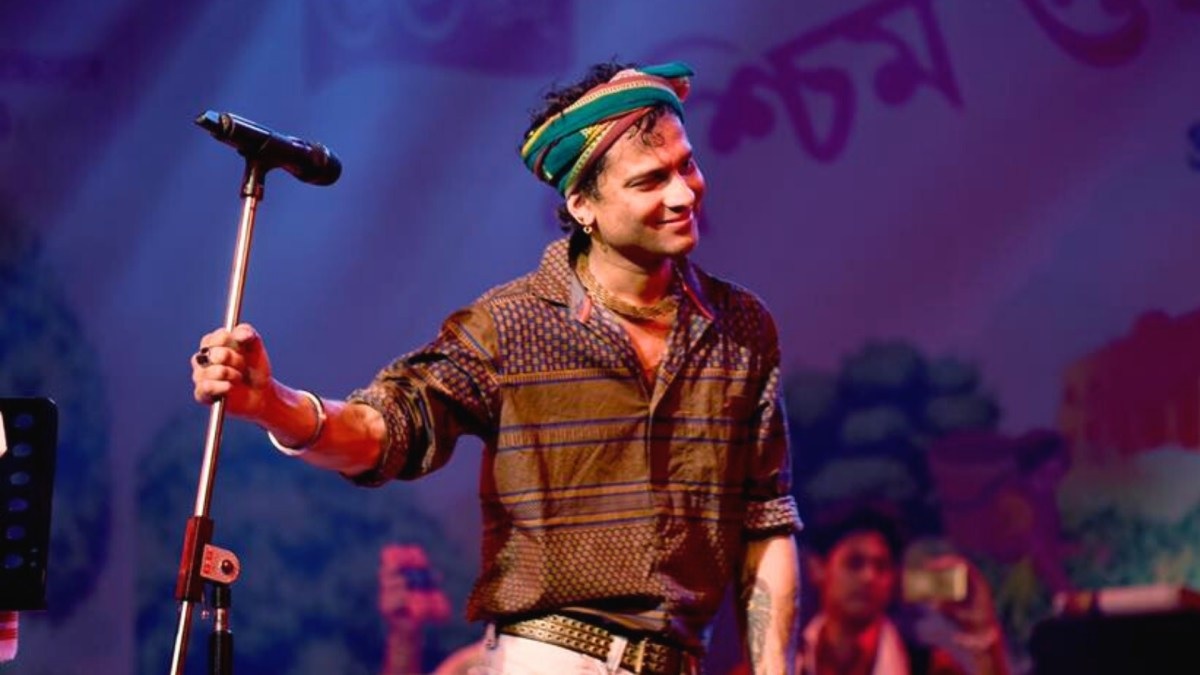
“Zubeen Garg was not just a singer — he was a phenomenon. A god in human form for millions,” said Manoj Kumar Das, management professional and commentator from Assam, in a heartfelt conversation reflecting on the life and legacy of the late music legend.

Das, who had known Zubeen for more than two decades, recalled his early memories vividly. “He was just a simple, soft-spoken boy when I first met him — full of restless energy, always humming tunes. He could pick up any instrument, any rhythm, and turn it into something magical. But what stood out most was his humility. Despite his fame, Zubeen never carried an ego. He could be sitting on the ground with villagers one day and on stage with the Prime Minister the next — and he would treat both moments with the same honesty.”

As Zubeen’s music grew to touch millions, Das said, his personality remained deeply rooted in empathy and rebellion. “He didn’t just sing songs — he sang people’s lives. From love and loss to injustice and resistance, his voice carried the pain and hope of an entire generation. He was a rebel at heart, a man who refused to bow to any establishment. He questioned power, spoke up for farmers, for the youth, for artists struggling to be heard. That courage made him more than a musician — it made him a moral compass.”

Das believes Zubeen’s humanity was what set him apart. “He was a man of immense compassion. He adopted children, rescued stray animals, supported students, and donated quietly without any publicity. Many don’t know how many lives he changed off stage. I used to joke that he was the greatest Rotarian who never joined Rotary. His service to humanity was instinctive, not planned.”

Recalling the day of Zubeen’s funeral, Das’s voice softened. “It was something I will never forget. It wasn’t just a farewell — it was a pilgrimage. People came walking from villages, towns, even other states. They didn’t come to see a celebrity. They came to mourn someone who was a part of their lives. There were tears in the eyes of children, farmers, shopkeepers — everyone. Even nature seemed to be mourning. I saw birds circling above, elephants standing still in silence. It was as if the entire ecosystem paused to honor him.”

For Das, what makes Zubeen Garg immortal is not just his art, but the values he embodied. “He broke barriers of religion, language, and region. He once said, ‘I’m not Hindu, I’m not Muslim, I’m not Christian — I’m human.’ And he lived that truth every day. He sang in over 40 languages — from Assamese to Tamil, from Hindi to Nepali — and reached hearts everywhere. That universality is rare.”

He believes Zubeen will be remembered alongside the greatest cultural reformers of Assam. “Like Srimanta Sankardev and Bhupen Hazarika, Zubeen stood for unity through art. He will find a place in our history books, not because of awards or records, but because he made people believe in goodness and humanity again.”

As the conversation drew to a close, Das reflected quietly: “Zubeen didn’t just sing songs — he gave voice to a people. His death left a void that can never be filled, but his spirit continues to guide us. He will live forever — not just in melodies, but in the conscience of Assam. Zubeen Garg was not merely a man — he became a movement.”

Author info

AT News's picture

Assam Times Staff. editor@assamtimes.org

Add new comment

Other Contents by Author

The Assam Pradesh Congress Committee on Friday launched the nationwide “Save MGNREGA Movement” in the state, opposing the Modi-led NDA government’s move to amend the MGNREGA Act and introduce a new law under the name “VB-G RAM G”. As part of the first phase of the agitation, press conferences were held simultaneously at district headquarters across Assam, including Kamrup Metropolitan, Sonitpur, Lakhimpur, Dhemaji, Tinsukia, Dibrugarh, Charaideu, Hailakandi, Darrang and Baksa. District Congress Committee presidents and senior party leaders addressed the media. In Guwahati, senior Pradesh Congress spokespersons Kushal Sharma, Rupak Das and Anita Devi addressed the press at the...
A strong call to unite the indigenous communities of Northeast India on a common platform was made at a roundtable discussion held on January 6 to mark the 21st death anniversary of noted nationalist leader Nibaran Bora. The discussion, titled “Crisis of Indigenous Peoples of Northeast India and Its Solutions”, resolved to carry forward Bora’s vision and ideology for safeguarding indigenous identity and rights. The meeting was attended by representatives of several indigenous organisations from Assam and other Northeastern states. Uncompromising nationalist leader Hasibur Rahman, a close associate of the late leader, delivered the keynote address, highlighting the growing threat to the...
Amid escalating political unrest ahead of its national elections scheduled for February 12, 2026, Bangladesh has recorded the killing of journalist Rana Pratap Bairagi, who has become the first journalist worldwide to be murdered this year. The global media safety and rights organisation Press Emblem Campaign (PEC) has strongly condemned the killing and demanded a thorough investigation to bring the perpetrators to justice. According to local media reports, Bairagi (45), a resident of Arua village in the Jessore region of southern Bangladesh, was fatally shot in the head by three assailants on January 5, 2026. The editor of the Bengali daily Dainik BD Khabar was found dead at Kopalia...
In a major crackdown on terror networks, a special NIA court in Guwahati has convicted Md. Kamruj Zaman, a key accused in a Hizb-ul-Mujahideen (HM) terror conspiracy case, and sentenced him to life imprisonment. Zaman, also known as Dr Hurairah and Kamaruddin, was awarded life imprisonment under Section 18 of the Unlawful Activities (Prevention) Act (UAPA), along with two additional sentences of five years’ simple imprisonment under other UAPA provisions. All sentences will run concurrently. The court also imposed fines in each case. The case relates to a 2017–18 conspiracy to set up an HM terror module in Assam to carry out terrorist activities and spread fear. NIA investigations...
An eerie silence is prevailing in Karbi Anglong and West Karbi Anglong districts following the death of two people belonging to different communities amid growing demand to evict the non tribals from the hills districts on Tuesday. Mobile internet has been suspended and the authority has imposed some restrictions on public gatherings to ensure peace and tranquility in the tribal dominated hills districts. Security forces are patrolling on the streets in the vulnerable areas to avert any untoward incident. But the tribal leaders and their followers have blamed it all on the government for allowing the non tribals to settle there which is contrary to the laid down rules. " We are...
Tension gripped West Karbi Anglong district for a second consecutive day on Tuesday as clashes between protesters and security forces in Kheroni area left two people dead and over 45 injured, including 38 police personnel. The deceased have been identified as a differently-abled youth from the Karbi community, who succumbed during police action to disperse agitators, and another individual who died in arson attacks on shops in Kheroni market. Reports indicate the violence involved stone-pelting, use of crude bombs, arrows, and bows by mobs, prompting police to resort to lathi-charge, tear gas, and blank firing. The unrest stems from long-standing demands by Karbi organisations for the...
The hills of West Karbi Anglong district in Assam witnessed a dramatic eruption of violence this week, underscoring deep frustrations over land rights and perceived governmental inconsistency. On December 22, 2025, protesters demanding the eviction of alleged encroachers from protected tribal grazing reserves torched the ancestral home of Karbi Anglong Autonomous Council (KAAC) Chief Executive Member Tuliram Ronghang in Dongkamukam and set fire to several shops in Kheroni Bazaar. The next day, despite prohibitory orders under Section 163 of the Bharatiya Nagarik Suraksha Sanhita (BNSS), clashes between opposing groups led to stone-pelting, injuring several people, including protesters,...
New Delhi: Senior journalist Sangeeta Barooah Pisharoty has created history by becoming the first woman to be elected President of the Press Club of India (PCI), marking a significant milestone in the institution’s long-standing legacy. Her election is being widely hailed as a landmark moment for gender representation and leadership in Indian journalism. A respected name in the profession, Pisharoty is known for her incisive reporting, editorial leadership and long-standing commitment to press freedom, ethical journalism and the welfare of media professionals. Over the years, she has earned wide credibility for her work on politics, governance and social issues. The Press Club of...
A two-day ‘People’s Consultation on Strengthening Humanitarian Response and Climate Resilience in the Brahmaputra Basin’ concluded today at Hotel Clubway Grand, Jorhat, with the adoption of the People’s Declaration for a Resilient Brahmaputra Basin. The event was organised by the North-East Affected Area Development Society (NEADS) in collaboration with the Inter Agency Group (IAG) of Assam and various local humanitarian civil society actors from across the Brahmaputra valley, with support from Start Network. The consultation brought together humanitarian practitioners, climate workers, community leaders, civil society organisations, youth groups and women’s collectives to deliberate on...
Guwahati: Curtains came down on the 9th Chalachitram National Film Festival at the Jyoti Chitraban premises in Kahilipara on 30 November 2025, as distinguished guests at the closing ceremony handed over awards, certificates, and cash prizes to the winning filmmakers in the presence of eminent film personalities, emerging director-producers and cine-goers. Organized by Chalachitram, a subsidiary of Vishwa Samvad Kendra-Assam, the two-day CNFF-25 showcased over 30 short features and documentaries across competitive and screening categories. ‘Koli’, directed by Jyotirmoy Mazumder, was adjudged the best short feature in the Northeast India category, while ‘Joba’, directed by Indira Baikerikar,...