
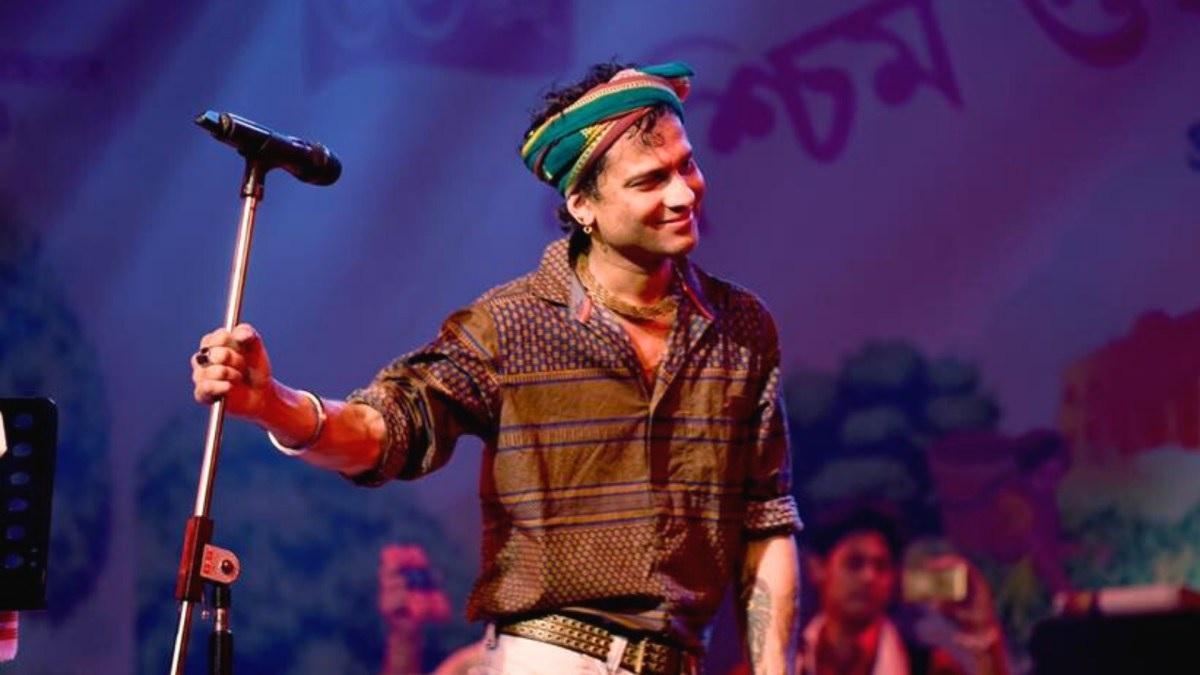
“Zubeen Garg was not just a singer — he was a phenomenon. A god in human form for millions,” said Manoj Kumar Das, management professional and commentator from Assam, in a heartfelt conversation reflecting on the life and legacy of the late music legend.
Das, who had known Zubeen for more than two decades, recalled his early memories vividly. “He was just a simple, soft-spoken boy when I first met him — full of restless energy, always humming tunes. He could pick up any instrument, any rhythm, and turn it into something magical. But what stood out most was his humility. Despite his fame, Zubeen never carried an ego. He could be sitting on the ground with villagers one day and on stage with the Prime Minister the next — and he would treat both moments with the same honesty.”
As Zubeen’s music grew to touch millions, Das said, his personality remained deeply rooted in empathy and rebellion. “He didn’t just sing songs — he sang people’s lives. From love and loss to injustice and resistance, his voice carried the pain and hope of an entire generation. He was a rebel at heart, a man who refused to bow to any establishment. He questioned power, spoke up for farmers, for the youth, for artists struggling to be heard. That courage made him more than a musician — it made him a moral compass.”
Das believes Zubeen’s humanity was what set him apart. “He was a man of immense compassion. He adopted children, rescued stray animals, supported students, and donated quietly without any publicity. Many don’t know how many lives he changed off stage. I used to joke that he was the greatest Rotarian who never joined Rotary. His service to humanity was instinctive, not planned.”
Recalling the day of Zubeen’s funeral, Das’s voice softened. “It was something I will never forget. It wasn’t just a farewell — it was a pilgrimage. People came walking from villages, towns, even other states. They didn’t come to see a celebrity. They came to mourn someone who was a part of their lives. There were tears in the eyes of children, farmers, shopkeepers — everyone. Even nature seemed to be mourning. I saw birds circling above, elephants standing still in silence. It was as if the entire ecosystem paused to honor him.”
For Das, what makes Zubeen Garg immortal is not just his art, but the values he embodied. “He broke barriers of religion, language, and region. He once said, ‘I’m not Hindu, I’m not Muslim, I’m not Christian — I’m human.’ And he lived that truth every day. He sang in over 40 languages — from Assamese to Tamil, from Hindi to Nepali — and reached hearts everywhere. That universality is rare.”
He believes Zubeen will be remembered alongside the greatest cultural reformers of Assam. “Like Srimanta Sankardev and Bhupen Hazarika, Zubeen stood for unity through art. He will find a place in our history books, not because of awards or records, but because he made people believe in goodness and humanity again.”
As the conversation drew to a close, Das reflected quietly: “Zubeen didn’t just sing songs — he gave voice to a people. His death left a void that can never be filled, but his spirit continues to guide us. He will live forever — not just in melodies, but in the conscience of Assam. Zubeen Garg was not merely a man — he became a movement.”
- 36858 reads





Add new comment