
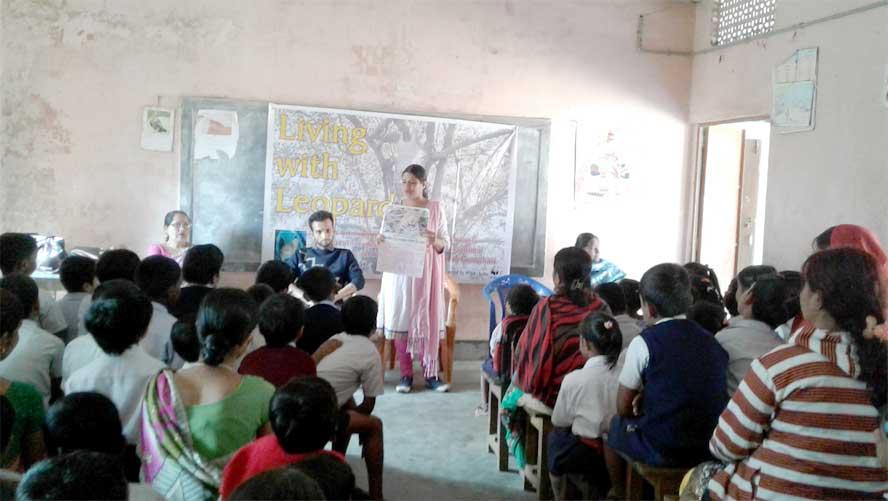
Assam, one of India’s seven biodiversity rich northeastern states, presents a landscape of lush evergreen forests and grasslands that is home to a great diversity of species including many of the rare cat species. Of the magnificent felines--while the tiger enjoys the lion share of all conservation efforts--the leopard however, continues to remain neglected. A Scheduled I species under the Wildlife (Protection) Act, 1972 and listed as vulnerable on the International Union for Conservation of Nature (IUCN) Red List, the survival of the leopard (Panthera pardus) in Assam is under threat due to an expanding human population and accompanying development and habitat fragmentation.
“Leopards prey on all sorts of animals--stray dogs, monkeys and even frogs and rats. Although leopards are found near human habitations, they tend to avoid people. However, with rapid growth of settlement on the hills, livestock became easy prey for the prowling cats. Livestock and even the guarding dogs would attract the felines. Prowling leopards have been a perennial problem that has led to reduction in the tolerance levels of people towards the animal resulting in killing of leopards. There had been retaliatory killing of leopards when people don’t get timely compensation,” said Mubina Akhtar, a noted conservationist who started a campaign—“Living with Leopards”— a community-based programme through education and outreach on human-leopard co-existence in the urban landscape of Guwahati. With a small grant received from the World Wildlife Fund, she had launched a campaign “Living with Leopards” in Guwahati in September, 2017. The objective is to build capacity for addressing the problem and to follow a policy of co-existence. People need to be taught how to avoid leopards and what to do in case of a confrontation
Guwahati have inter-connected hillocks which were the natural habitat of leopards and provided natural passage to the spotted cat. A good population thrived in the surrounding hills from Garbhanga Kamakhya, Gaushala, Jalukbari, Maligaon, Kahilipara, Narakasur hills, Narengi-Satgaon to Amchang Wildlife Sanctuary. Rampant encroachment on the hills severed connectivity between leopard habitats and brought the animal face to face with people. There has been a sharp rise in the number of straying leopards and the consequent conflict with humans.
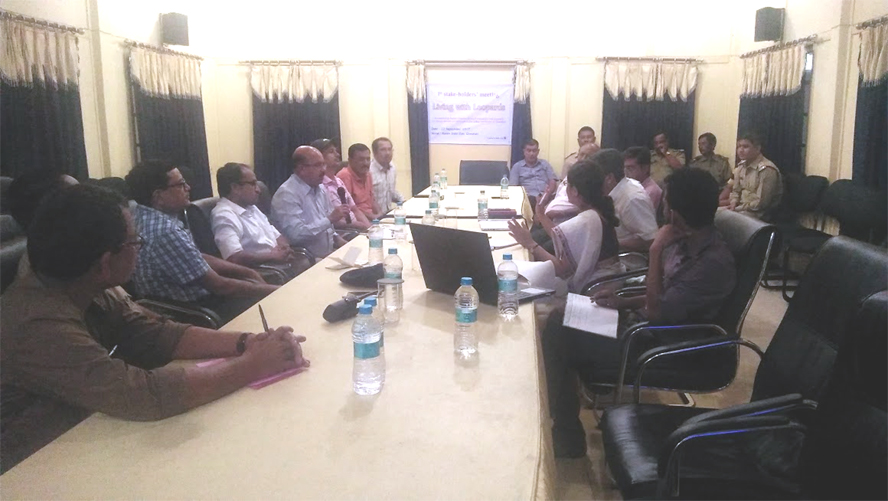
“In Mach 2012, we demanded the state government to constitute rapid response teams in all the 21 territorial forest divisions under its direct control. While anti-depredation units are there in each wildlife division their functioning has been marred by manpower and logistics constraints. On the other hand the response system needs to be upgraded and better-equipped to deal with the growing incidence of straying wildlife,” Mubina asked civil and police administrations to support the initiative in order to ensure safety of humans and survival of the species as well. The general perception is that leopards hunt and kill people, whereas leopards, like any major carnivore, prefer to avoid people. Because of this perception whenever there is a leopard sighting, people want to get rid of it instantly and pressurize the forest department to tranquilize and translocate the animal. When an adult leopard is caged, it is usually sent to Assam State Zoo cum Botanical Garden in Guwahati. The leopards are often released back to the wild after their injuries were treated.
“At one point, there were scores of caged leopards in the Guwahati zoo brought from different areas of the city. Caging a leopard and releasing it elsewhere is a very unscientific method because we are disturbing the ecological balance. We like to believe that translocation gives individual animals another chance. What we are doing is putting them deep inside the jungle in the belief that they are resilient and survive all odds. But the reality is quite different. Despite years of translocation, there has been no attempt to follow the released animals to study whether they survived or not. Translocation or the prevalent method of trapping the stray leopards and relocating them to faraway forests is flawed. Leopards are territorial and when re-located, some will try hard to get back to their earlier domain. With vast wild spaces lacking, a leopard walking through a new inhabited area is a recipe for more disaster. Translocation cannot be the eventual solution. Rather creating awareness among the masses by educating them the importance of protecting the animal can be a solution for a sustainable co-existence,” said Akhtar.
“From 2008-2018, for almost a decade, we had seen rising counts of incidents involving humans and leopards and the spate of such interactions leaving casualties on both sides. In one such incident in November 2017, 35-year-old Anwar Ali, who was a driver by profession, was mauled by a leopard in the premises of a school called Dhirenpara Sishu Vidya Niketan. Four other people were also wounded by the leopard. Actually, a large mob was chasing the leopard and the animal entered the school to take refuge. It tried to attack a boy but while saving the boy, Anwar was attacked by the leopard. Anwar succumbed to his injuries at Guwahati Medical College & Hospital (GMCH). Anwar’s wife Ranjita, told us that when so many people chase and try to corner the animal, it would naturally try to attack anyone coming in its way. She joined our campaign and together, a year later, a memorial and awareness meet took place in the same school where the incident happened. We helped Ranjita to navigate through the red tapes and get a compensation of Rs. 400,000” she added.
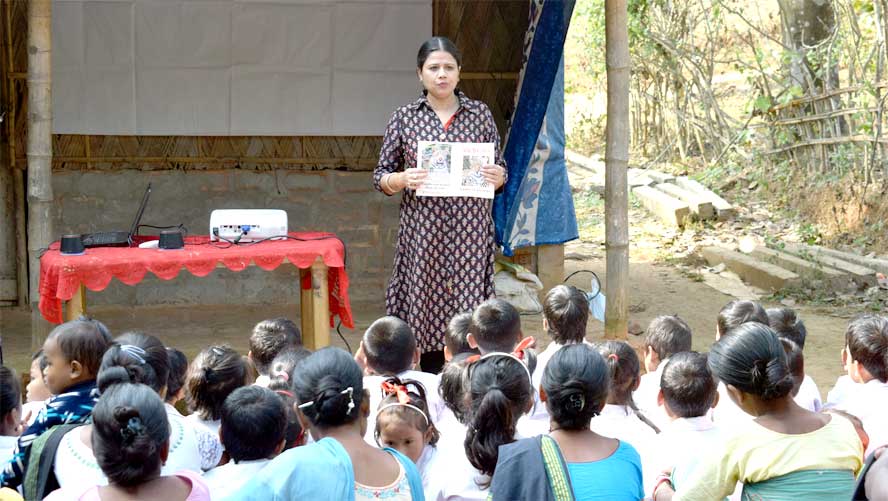
“We organize outreach programmes among the communities and try to raise awareness on the issue through interaction. We try to tell people the ‘do’s and’ don’t’ distributing brochures, posters etc and show films about the behavior of the animal and how we need to behave when there is a sighting of the cat in the neibourhood.. We always tell them to leave these animals alone because they will retaliate when they are cornered,” Akhtar said.
“In human-leopard interaction cases, crowd management often comes as the biggest challenge. Large crowd make even a caged animal nervous and agitated. I remember a leopard (a lactating mother) beat her head on the iron rods of the cage and suffered serious injury that led to her death. It was indeed a very tragic incident. More bothering when you know in such cases the cubs won’t survive! I would invariably narrate this incident in the awareness meetings and found many with moistened eyes; it helped in winning over their support to the cause!”
Killing of a leopard is an offence and anyone found guilty could be penalized under provisions of the law. Generally, mobs are involved in the killing of a big cat. As such, there are no cases registered against the violators.
A sustained process of sensitization, awareness and education in local languages and an advisory for public understanding of protection, conservation and legal measures helped in reduction of the confrontations gradually and in the last couple of years incidents have noticeably come down. The local media has been a strong partner in the campaign. Orientation programmes for media persons (both print and electronic) were held to ensure responsible media coverage when it comes to stories concerning wildlife.
“Living with Leopards” seeks to build off existing efforts and fill remaining gaps in its outreach to garner local support in reducing confrontations between humans and leopards and carry on with wildlife conservation goals.
- 32954 reads


Add new comment