

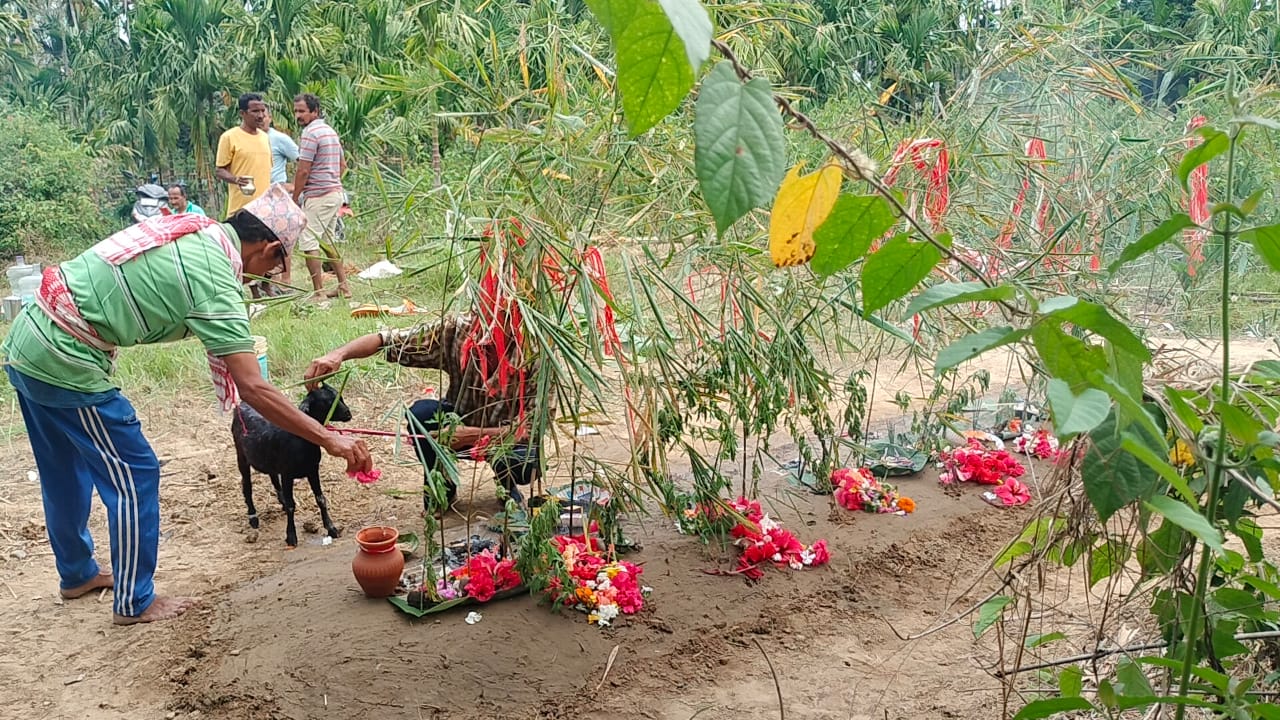
Golaghat District, Upper Assam witnessed a vibrant celebration of Sansari Puja, a traditional worship ceremony practiced by the Gorkha community. Sansari Puja, also known as the Worship of Our Own World, is a unique ritual where Gorkhas revere the Earth as 'Mother' and the world as 'Woman.' This sacred ceremony took place on Saturday at Chandanpur village under Merapani Sub-Division Sarupani Gaon Panchayat.
The Gorkhas have always been devoted nature worshippers, deeply connected to their surroundings. They hold rivers, mountains, streams, forests, and biodiversity in high regard, considering them as sacred entities. Even in the era of globalization, Gorkhas maintain their love for nature and conservation while embracing their place in the global village. Sansari Puja serves as a testament to their unwavering commitment to the environment.
The ceremony is performed during the months of Baishak and Bohag, corresponding to April and May in the Bikram Sambat and Assamese calendars, respectively. It marks the beginning of the new annual calendar and serves as an invocation to Sansari Maai, the Mother of all Creations. The Gorkhas pray for timely rain, abundant produce, good harvest, and the well-being, peace, and prosperity of the community. The celebration is a communal affair, with people from all walks of life joining in the festivities.
The Sansari Puja ceremony is divided into two halves. The worship begins with paying homage to Lord Ganesha, followed by prayers to various aspects of nature, such as water bodies, forests, even land, and the goddess Maharani. Sacrifices of hens, ducks, and pigeons are made as offerings to these deities, symbolizing the community's desire for protection, prosperity, and harmony throughout the year. Finally, Sansari Maai, the epitome of Mother Earth, is worshipped with a wide array of offerings and prayers.
Elders from each household bring rice, vegetables, fruits, and a mandatory organic homegrown hen egg to the worship venue. The eggs, with names inscribed on them, are cracked open, and the contents are interpreted to provide predictions for the year ahead. A clear egg signifies an uneventful year, a fertilized egg symbolizes prosperity or birth, and a rare egg with blood predicts the occurrence of a death in the family.
The Sansari Puja concludes with a joyful community feast, where people cook and eat together, utilizing voluntary donations received during the ceremony. This festive occasion unites the Gorkha community, reinforcing their cultural heritage and strengthening their bonds.
While the celebration of Sansari Puja continues to thrive in rural areas, some urban Gorkhas are concerned about the erosion of these traditional practices. They emphasize the importance of preserving their cultural heritage for future generations, recognizing that strong roots contribute to the growth and resilience of the community.
The recent Sansari Puja in Golaghat District served as a vibrant reminder of the Gorkhas' deep reverence for nature and their commitment to live harmoniously with the environment. It showcased their cultural richness and traditions, highlighting the significance of upholding these practices for a sustainable and thriving future.
- 32352 reads



Add new comment