

NEADS Observes Disaster Risk Reduction Day in Jorhat, Golaghat
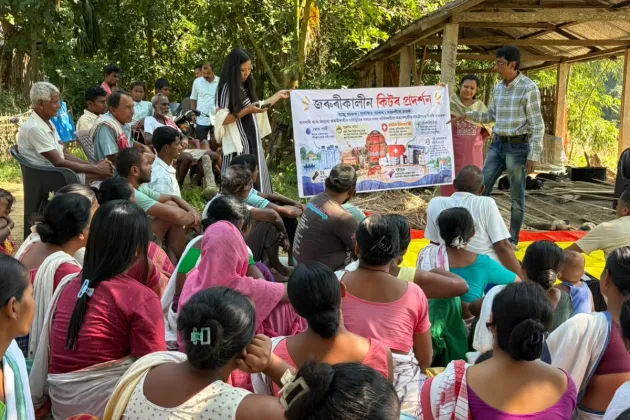

GUWAHATI, October 15, 2026 — North-East Affected Area Development Society (NEADS), in collaboration with the District Inter Agency Group (IAG), Jorhat, observed the International Day for Disaster Risk Reduction (IDDRR) at Boralimora village in Jhanjimukh, Jorhat district, and No. 1 Afala Gaon in Mahuramukh, Golaghat district, on Tuesday.
Held under the global theme “Resilience Starts at Home,” the programme focused on household preparedness, community participation and the protection of floodplain ecosystems to reduce disaster risks and strengthen the resilience of vulnerable communities.
Assam and the wider Northeast are highly vulnerable to recurring floods, riverbank erosion, landslides and other climate-related hazards. Repeated flood events have highlighted the need for effective early warning systems, household preparedness plans and sustainable approaches to disaster risk reduction.
The observance emphasised the importance of helping families anticipate, prepare for and respond to disasters through risk awareness, timely access to early warnings and collective action. Participants also highlighted the need to integrate disaster risk reduction into local development planning and climate change adaptation initiatives.
Particular attention was given to communities living along riverbanks and in floodplains, where recurring floods, erosion and displacement threaten homes, agricultural land and livelihoods. Participants stressed the importance of protecting wetlands, natural drainage systems and floodplain ecosystems, alongside promoting sustainable land and water management.
Speaking on the occasion, NEADS director Tirtha Prasad Saikia said disaster resilience could not be achieved by households alone.
“Disaster resilience begins at home, but it cannot be achieved by households alone. Communities living along riverbanks and in floodplains need timely early warnings, access to preparedness resources, secure livelihoods and healthy ecosystems that can reduce the impact of floods. We must recognise the knowledge and leadership of local and indigenous communities and ensure that disaster risk reduction is locally led, inclusive and integrated with climate adaptation and ecosystem protection,” he said.
The programme also highlighted the roles of indigenous communities, women, young people, older persons and persons with disabilities in disaster preparedness and response. Recognising traditional knowledge, encouraging inclusive decision-making and involving communities in risk assessments and disaster planning were identified as essential to building resilience.
NEADS, which works across Assam and Northeast India on humanitarian response, disaster risk reduction, climate change adaptation and sustainable development, reiterated the need to move beyond emergency relief towards proactive preparedness, ecosystem-based approaches and sustainable recovery.
The observance reaffirmed NEADS and IAG Jorhat’s commitment to promoting community-led disaster risk reduction and building safer, more inclusive and resilient communities, particularly in areas exposed to recurring floods, riverbank erosion and other climate-related hazards.
Comments (0)
No comments yet. Be the first to share your thoughts.
Leave a Comment