

International Day Against Drug Abuse: Innovation key to combating illicit drugs
Illegal drugs continue to devastate lives, families and communities across the world, with young people bearing the greatest burden of addiction and drug-related crime. Despite strict laws, illicit drugs remain widely available through illegal trafficking networks that constantly adapt to evade enforcement.
Drug abuse not only causes immediate physical harm but also leaves lasting psychological and emotional scars, particularly among adolescents and young adults. Impaired judgement caused by drug use often leads to risky behaviour, increasing the chances of contracting HIV, hepatitis and other sexually transmitted infections.
Some of the most commonly abused illegal drugs include cannabis, cocaine, heroin, methamphetamine, ecstasy and LSD. In India, substances such as ganja and other narcotics continue to pose serious social and public health challenges.
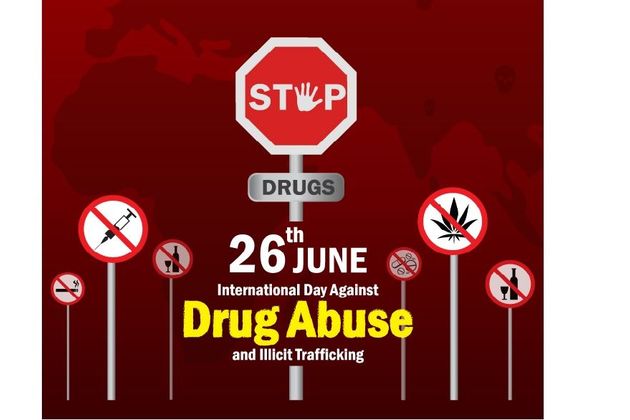
Recognising the global nature of the problem, the United Nations General Assembly declared June 26 as the International Day Against Drug Abuse and Illicit Trafficking through Resolution 42/112 in 1987. The annual observance seeks to strengthen international cooperation and raise awareness about the dangers posed by illicit drugs.
This year's campaign focuses on innovation in tackling the drug problem. As trafficking networks increasingly exploit new technologies to expand their markets, governments, law enforcement agencies, civil society organisations and local communities are being encouraged to adopt smarter and more coordinated strategies to reduce both the demand for and supply of illegal drugs.
International efforts to combat narcotics date back more than a century, beginning with the Shanghai Opium Commission in 1909. Since then, the United Nations has adopted three major international drug control conventions—in 1961, 1971 and 1988—to regulate the production, trafficking and abuse of narcotic and psychotropic substances.
The United Nations Office on Drugs and Crime (UNODC) continues to support member states in implementing balanced, evidence-based policies that combine law enforcement with prevention, treatment and respect for human rights.
In his message marking the day, UN Secretary-General António Guterres called for solutions rooted in "foresight, innovation and solidarity." He urged countries to strengthen action against organised criminal networks, curb the manufacture of synthetic drugs, and increase investment in prevention, harm reduction and treatment programmes.
Drug trafficking remains a highly organised global enterprise that exploits gaps in governance and regulation. Experts say the fight against illicit drugs cannot be left to governments alone. Families, educational institutions, civil society organisations and citizens all have a role in preventing substance abuse and building healthier, safer communities.
The International Day Against Drug Abuse serves as a reminder that addressing the global drug problem requires sustained cooperation, innovative thinking and a collective commitment to protecting future generations from the devastating impact of addiction.
Comments (0)
No comments yet. Be the first to share your thoughts.
Leave a Comment