

Humanitarian Workers Stand Up for People in Need
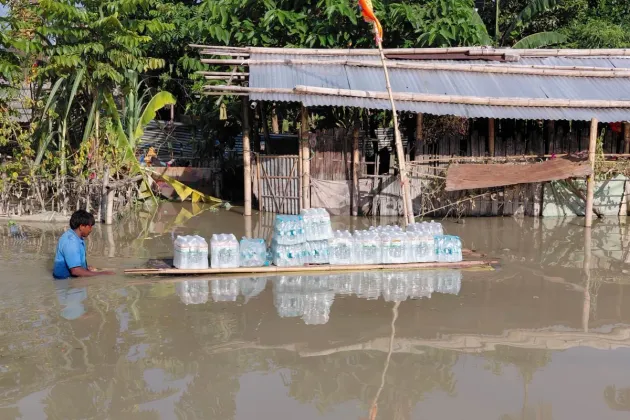
More than 100 people have reportedly lost their lives, while lakhs have been directly affected. For many families, the damage and destruction caused by the disaster may take years to overcome.
The immediate support extended by people across Assam has, however, been remarkable. Individuals, voluntary groups and organisations from different parts of the State and the country came forward in various ways to help flood-affected communities. Their efforts reflected the spirit of humanitarian assistance and solidarity with people facing a crisis.
Floods are only one example. Natural disasters, conflicts and other human-made crises regularly create situations in which humanitarian assistance becomes essential.
When lives are at risk, those who come forward to help should never become targets themselves. Yet humanitarian workers continue to be killed, injured, abducted, detained and obstructed while carrying out their work. Many of them are national staff serving their own communities.
Attacks on humanitarian personnel have consequences far beyond the individuals directly affected. They can disrupt food distribution, healthcare, protection and other life-saving services, leaving communities with even fewer means to survive and recover.
Under international humanitarian law, civilians, including humanitarian and medical personnel, must be respected and protected. Parties to armed conflict are also required to allow and facilitate humanitarian relief for people in need, in accordance with international humanitarian law.
Every year on August 19, the world observes World Humanitarian Day (WHD)—a day to honour humanitarian workers and stand with people affected by crises across the world. It is also a reminder that international law and humanitarian principles must be upheld in practice.
Preventing attacks, ensuring humanitarian access and establishing accountability are essential to protecting life and human dignity. The day honours humanitarian workers, their service and their legacy, while renewing the call to protect those who continue this work.
The date marks the bombing of the Canal Hotel in Baghdad, Iraq, on August 19, 2003, in which 22 humanitarian workers were killed, including Sergio Vieira de Mello, the then Special Representative of the UN Secretary-General for Iraq. Five years later, the United Nations General Assembly adopted Resolution 63/139, designating August 19 as World Humanitarian Day.
Each year, World Humanitarian Day brings together partners from across the humanitarian system to advocate for the survival, well-being and dignity of people affected by crises, while also highlighting the safety and security of humanitarian workers. The global campaign is led by the United Nations Office for the Coordination of Humanitarian Affairs (OCHA).
The scale of humanitarian need remains enormous. By the end of May 2026, more than 252 million people were in urgent need of humanitarian assistance and protection—13 million more than when the 2026 Global Humanitarian Overview was launched. As of May 31, humanitarian response plans required US$33.66 billion, but had received only US$8.21 billion, or 24.4 per cent of the amount required.
OCHA also reported that at least 326 humanitarian workers were killed across 21 countries in 2025, taking the number of humanitarian workers killed over the previous three years to more than 1,000. The United Nations recorded more than 37,000 civilian deaths across 20 armed conflicts in 2025, amounting to approximately one recorded civilian death every 14 minutes.
World Humanitarian Day comes at a time when humanitarian workers face enormous challenges across the world. Closer home, many individuals and voluntary groups have been working, often without publicity or expectation of reward, in flood-affected areas of Charaideo, Sivasagar, Jorhat and Golaghat.
Their contribution deserves recognition.
As communities in Upper Assam continue their difficult recovery from the recent floods, World Humanitarian Day offers an opportunity to acknowledge and encourage the volunteers and humanitarian workers who have stood beside people in need.
Their work reminds us of a simple but important principle: when disaster strikes, humanity must come before everything else.
Comments (0)
No comments yet. Be the first to share your thoughts.
Leave a Comment