

Beyond the Negotiating Halls: From Global Climate Commitments to Local Action
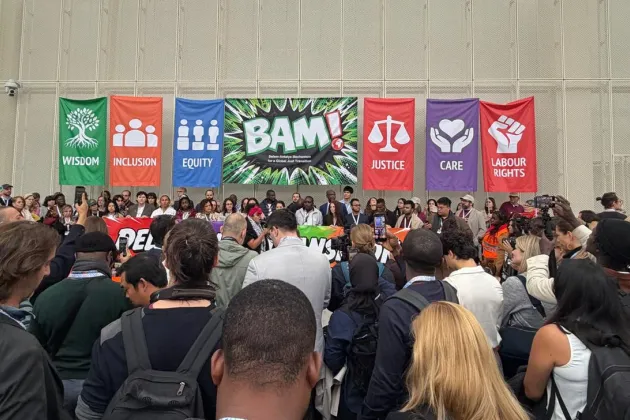

Beyond the Negotiating Halls: From Global Climate Commitments to Local Action
As COP31 brings global climate priorities into focus, the real test of climate action lies in whether resources, decisions and commitments reach vulnerable communities.
By Tirtha Prasad Saikia
Antalya, Türkiye | COP31
As world leaders, climate negotiators, policymakers and civil society organisations gather in Antalya, Türkiye, for COP31, the global climate conversation is increasingly shifting towards translating commitments into action. A decade after the Paris Agreement entered into force, the challenge is no longer simply to announce ambitious targets, but to ensure that international commitments deliver meaningful outcomes for people and ecosystems already experiencing the impacts of climate change.
Climate finance, adaptation, loss and damage, just transition and biodiversity conservation remain central to the discussions. Yet, one fundamental question continues to demand attention: Are global climate commitments reaching the communities that need them most?
For Assam and the wider Northeast, this question is closely connected to everyday realities—recurrent floods, riverbank erosion, changing rainfall patterns, displacement and growing livelihood insecurity.
Northeast India: A crossroads of Asia
Northeast India occupies a unique geographical and ecological position at the crossroads of South Asia, East Asia and Southeast Asia. The region connects the Eastern Himalayas and Tibetan Plateau with the Indo-Burma biodiversity landscape and the wider Ganga–Brahmaputra–Meghna river basin. Its geographical connections extend towards Bangladesh, Bhutan, China, Myanmar and Nepal.
Its significance extends far beyond political boundaries. The Eastern Himalayas and Indo-Burma are globally recognised biodiversity hotspots, while the wider Hindu Kush Himalayan region sustains river systems that provide water and ecosystem services to approximately 1.9 billion people.
The Brahmaputra, known as the Yarlung Tsangpo in the Tibetan Plateau, flows through China, India and Bangladesh. The Barak river system connects the region with the Meghna basin. These interconnected landscapes underline the importance of regional cooperation in water security, biodiversity conservation and climate resilience.
However, the region is increasingly exposed to climate-related risks. According to the Government of Assam, approximately 39.58 per cent of the state's geographical area is flood-prone. Historical assessments also indicate that around 4.27 lakh hectares of land have been lost to riverbank erosion since 1950.
These figures reflect the scale of vulnerability confronting communities, agriculture and local economies. For thousands of families, climate change is not a distant environmental concern but an immediate threat to homes, livelihoods, food security and social stability.
Climate resources must reach the grassroots
One of the most important issues at COP31 is the accessibility of resources for climate action. International mechanisms such as the Green Climate Fund, Adaptation Fund, Global Environment Facility and Fund for Responding to Loss and Damage offer important opportunities for developing countries.
However, the availability of financial commitments does not automatically translate into action on the ground. Complex accreditation requirements, lengthy application procedures and institutional barriers often prevent grassroots organisations and community-based institutions from accessing these resources directly.
UNEP's 2026 Adaptation Gap Report estimates that developing countries will require approximately US$305 billion annually for adaptation by 2035, while international public adaptation finance flows remain substantially lower. This highlights the enormous gap between climate-related needs and available resources.
Local organisations must therefore be recognised not merely as implementing agencies, but as partners in identifying priorities, designing interventions and delivering climate solutions. Climate finance must become accessible, predictable, transparent and responsive to local realities.
Simplified procedures, stronger direct-access mechanisms and greater investment in local institutions are essential to ensure that resources reach the last mile.
Locally led adaptation and community resilience
Climate adaptation cannot succeed through top-down approaches alone. Communities must be recognised as knowledge holders, decision-makers and leaders of climate action.
Across the Eastern Himalayan region, indigenous communities possess generations of knowledge in traditional agriculture, indigenous seed conservation, natural resource management and ecosystem stewardship. Community-led initiatives in agroecology, disaster preparedness, sustainable livelihoods and ecosystem-based adaptation can strengthen food security, biodiversity conservation and climate resilience.
However, locally led adaptation requires more than community participation. It requires resources, decision-making authority and sustained institutional support.
Investment in community institutions, indigenous knowledge systems, early warning mechanisms and climate-resilient livelihoods must become central to adaptation strategies. Grassroots organisations can play a critical role in bridging the gap between policy frameworks and the practical needs of vulnerable communities.
Loss and damage and a just transition
For communities repeatedly affected by floods, riverbank erosion and displacement, adaptation alone is not always sufficient. The loss of homes, agricultural land, livelihoods and cultural assets creates economic and non-economic losses that require appropriate support.
The Fund for Responding to Loss and Damage represents an important step in international climate cooperation. Its effectiveness, however, will depend on adequate resources, transparent governance and equitable access for affected communities.
Similarly, the transition towards a low-carbon economy must be fair and inclusive.
For Northeast India, a just transition should encompass sustainable agriculture, community-led renewable energy solutions, forest-based livelihoods, biodiversity conservation and alternative economic opportunities. It must safeguard indigenous rights, traditional knowledge and community livelihoods while ensuring that climate action does not undermine river ecosystems, forests or other natural resources.
A transition that overlooks the needs and aspirations of local communities risks creating new vulnerabilities even as it attempts to address existing environmental challenges.
Beyond national boundaries: Regional cooperation and climate justice
Climate change, biodiversity loss and river systems do not respect political boundaries. The interconnected landscapes of the Eastern Himalayas, Tibetan Plateau, Brahmaputra basin and Indo-Burma region demand stronger regional cooperation.
Collaboration among neighbouring countries on scientific research, hydrological information sharing, early warning systems, biodiversity conservation and climate-resilient planning can strengthen responses to shared challenges. South-South cooperation can further facilitate the exchange of practical experiences and locally grounded solutions.
For a region shaped by transboundary rivers and interconnected ecosystems, cooperation is not merely a diplomatic preference; it is an essential part of building long-term climate resilience.
As COP31 continues in Antalya, its success should not be measured only through declarations and financial pledges. It must also be assessed by whether vulnerable communities can access resources, whether adaptation is genuinely locally led, whether loss and damage receives meaningful attention and whether indigenous peoples have a voice in decisions affecting their lives.
Climate justice means equitable access to resources, protection of indigenous peoples' rights, recognition of traditional knowledge and meaningful participation in shaping climate solutions.
The distance between international negotiating halls and climate-affected villages must become shorter. Climate resources must reach the last mile, adaptation must be led by communities, and global commitments must translate into tangible improvements in people's lives. That is the real measure of climate action beyond the negotiating halls of COP31.
Comments (0)
No comments yet. Be the first to share your thoughts.
Leave a Comment