

Assam’s Roads Are Becoming Death Traps
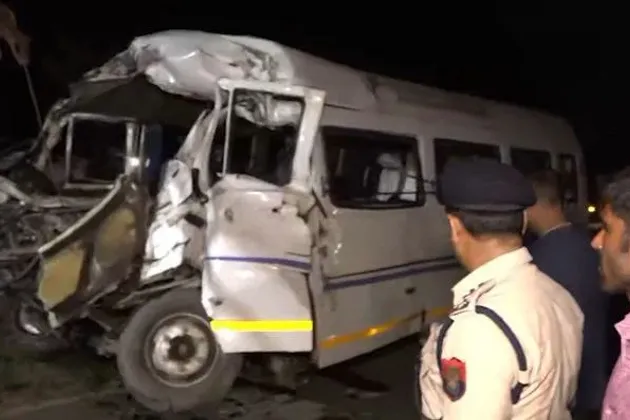

GUWAHATI, September 7, 2026 — Roads are meant to connect people, places and possibilities. In Assam, however, too many roads are becoming sources of fear. The state’s growing road-accident toll is not simply a consequence of reckless driving; it also exposes serious failures in road design, maintenance, enforcement and accountability.
According to official data, Assam recorded 12,572 road accidents and 2,760 fatalities in 2024, besides thousands of injuries. Every figure represents a human tragedy—a family that has lost a breadwinner, a parent, a child or a loved one.
Speeding, rash driving, drunken driving, dangerous overtaking and violations of traffic rules are undoubtedly major causes of accidents. But motorists cannot be expected to navigate roads riddled with potholes, broken surfaces, damaged shoulders, inadequate drainage, waterlogging and poorly marked diversions without consequence.
The problem becomes particularly acute during the monsoon. Rainwater fills potholes, making them difficult to see. A vehicle travelling at speed can suddenly drop into a deep crater, lose control or swerve into the path of another vehicle. For two-wheeler riders, the consequences can be devastating.
The figures on pothole-related accidents should be a matter of serious concern. Government data recorded 197 pothole-related accidents in Assam in 2024, causing 87 deaths and 179 injuries. Potholes that claim lives cannot be dismissed as a minor inconvenience or an unavoidable feature of the rainy season. They represent a road-safety failure.
Assam’s heavy rainfall, recurring floods, erosion and waterlogging undoubtedly make road construction and maintenance challenging. But these conditions make proper engineering and preventive maintenance more necessary—not less.
A road should not be judged by the ceremony at which it is inaugurated, but by how safely it serves the public years later. Yet road development often receives far greater attention than road maintenance. New projects are announced and inaugurated with considerable publicity, while the responsibility for maintaining existing infrastructure can become fragmented between departments, agencies and contractors.
That raises a fundamental question: who is accountable when a road becomes dangerous?
When potholes appear soon after construction or repair, who is responsible for the quality of the work? When a dangerous stretch remains unrepaired for months, which agency must answer to the public? When warning signs, barricades or reflective markings are missing and an accident occurs, should responsibility simply end with blaming the driver?
Accountability cannot begin only after a fatal accident.
Road agencies must adopt a system of regular inspection and preventive maintenance, particularly before and during the monsoon. Dangerous potholes should be identified and repaired before they cause crashes. Drainage must be designed and maintained to prevent prolonged waterlogging. Damaged bridges, culverts, shoulders and embankments require timely intervention rather than emergency repairs after they fail.
Road engineering also needs greater attention. Accident-prone stretches should undergo professional safety audits. Proper road markings, lighting, warning signs, crash barriers and speed-control measures should be installed according to actual risk. Construction zones must be adequately barricaded and clearly visible, especially at night.
The quality of repairs also matters. Repeatedly filling potholes only for them to reappear after the next heavy rain is not maintenance—it is a cycle of temporary fixes that wastes public money and leaves road users exposed.
At the same time, motorists must accept their share of responsibility. Speed limits should be obeyed, helmets and seat belts used, dangerous overtaking avoided and mobile-phone use while driving strictly prohibited. Driving under the influence of alcohol must attract firm enforcement. Traffic laws are meaningful only when they are consistently implemented.
Technology can also make road management more responsive. A simple public reporting system could allow citizens to flag potholes, damaged roads, missing signs and other hazards. Authorities could then map these complaints, verify them and prioritise repairs based on danger and traffic volume rather than administrative convenience.
More importantly, road safety must become a permanent public-policy priority rather than an issue that resurfaces after a major crash. Accident data should inform road design, maintenance schedules and enforcement strategies. Agencies responsible for roads should be required to publicly track dangerous locations, repair timelines and the status of corrective action.
There is also a larger question of public money and public trust. Building new highways while existing roads deteriorate is hardly sustainable development. Where tolls are collected, commuters are entitled to expect reasonable standards of safety and maintenance. Where public funds are spent on repairs, citizens are entitled to know whether the work was completed properly and whether contractors and agencies were held responsible for failures.
The government, road agencies, contractors and road users all have a role in making Assam’s roads safer. But the primary responsibility for safe public infrastructure rests with the authorities. Citizens should not have to gamble with their lives every time they travel from one district to another.
Assam’s road-accident crisis should therefore be treated as a governance issue, not merely a traffic issue. Every preventable death on a dangerous road represents more than individual misfortune; it may also represent a failure to design, inspect, maintain, warn or enforce.
A pothole is not merely a hole in the road. Left unattended, it can become a hole in a family’s future.
Assam needs roads that do more than connect destinations. It needs a road system built on quality, maintenance, accountability and safety.
The test of development is not how many kilometres of road are inaugurated, but how safely people can travel on them—and return home.
Assam deserves roads that connect lives, not roads that end them.

Comments (0)
No comments yet. Be the first to share your thoughts.
Leave a Comment