
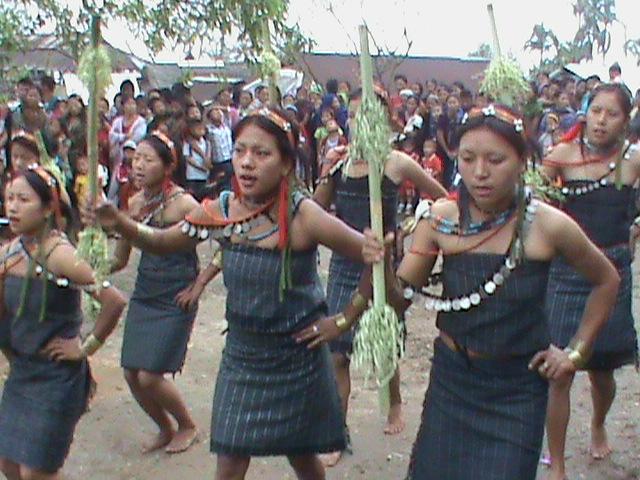
The Villagers of Bura-Namsang village under Tamlu Sub-Division of Longleng district in Eastern part of Nagaland has first time, Celebrated the Monyu festival with colourful programmes. The Bura-Namsang Village which was established in 18th Century, at present has 1000 families is the biggest village of the Longleng district.
The Monyu the most popular and biggest festival falls in the month of April every year soon after the sowing season. The festival is celebrated for 6 days, begining from 1st to 6th April every year. It also marks the end of Winter and begining of Summer or Monsoon. A day or two prior to the festival the green signals of the dawn of festival is made by beating drums with a distinct tune synchronised purposely for the event, trditionally named "Lan Nyangshem".

The Priest or the Village elders performed a ritual and pridict what the forthcoming festival would be, a blessing or a curse. In case the prediction shows the sign of danger, the villagers are warned to be careful during the festivity. Monyu is the time to bid farewell to the on going year and heralds the dawn of the new year. It also the time of prayers and dedication for the sprouting crops that are already sowed. The main feature of the Monyu is the occasion, when the male members of the family shows love and renewal of the affectioned feelings towards their married daughters and sisters by presenting them the purest of the rice beer and specially prepared foods. Such conduct reflects the general status of the Phom Women that "they are respected and honoured". Planning and decision relating to the community welfare to be implemented throughout the years are decided during the festival.
The Six days long festival follows a circle of ritual and activities which are categorised day-wise as following. The first day is the day for all over preparation. Besides preparing of domestic chores every household go to collect wrapping leaves and bamboo's which is called, " Shongten-Laiphen".
The second day is for Compulsory brewing of all kinds of Rice-beer.

The third day is meant for the varying age group from oldest one to the youngest. They gather together and feast admist dancing, merry making etc., Thus the day is named, " Aiha Okshok".
The fourth day is coined as "Chingi Okshok", which practically means general festivity and also the day of arrival of guests from the neighbouring villages.
- 26952 reads




Add new comment