
Skip to content Skip to navigation

13 Years After: Waiting for Justice in the Parag Das Assassination Case

"We have waited thirteen years, another hour should not be to difficult to bear, will it?" said an elderly bystander to a colleague, as all of us waited to hear the verdict of the Central Bureau of Investigation (CBI) charge sheet filed in the Kamrup District and Sessions Court, against the surviving accused in the Parag Kumar Das assassination case. The premise of the court was packed with media persons, lawyers, human rights activists, and police personnel. Among the crowd were nervous supporters of the accused who had regulation crew cuts, wore trendy shoes, jeans and white shirts. A narrow path leading to the court separated them from Parag Das’ well wishers and friends, and for an illusionary moment, the possibility of violence – should the accused be found guilty – hung over the balmy, overcast Guwahati morning. A few minutes later, the accused – Mridul Phukan – walked out with a nervous smile on his face, even as waiting news anchors frantically whispered, "Khalas, khalas" (or, "finished, finished") to their newsrooms. After thirteen years, the only surviving accused in the murder of Assam’s foremost activist and public intellectual, walked into the arms of his edgy friends and into a black SUV that whisked him away. He could afford to smile because the CBI was unable to present enough evidence to indict him in a murder that took place in full public view.

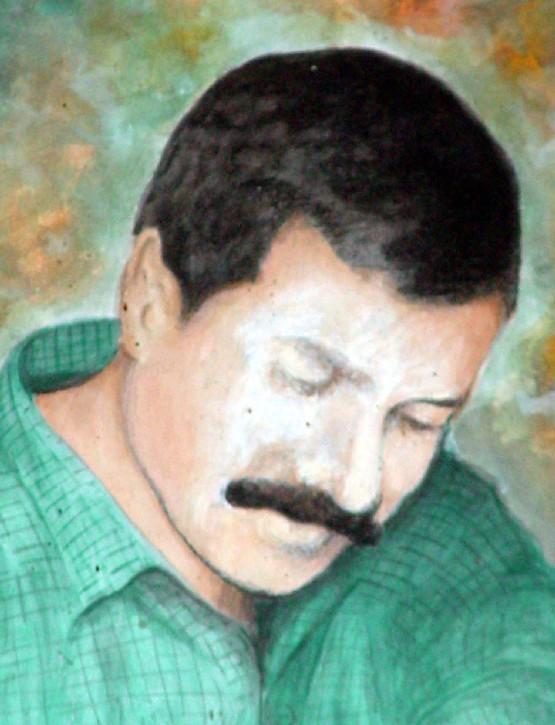
In the afternoon of May 16, 1996 as Parag Das was bringing home his young son from school in Chandmari, Guwahati, he was assassinated by four men. An unassuming, erudite man, Das was one of the founders of the human rights movement in Assam and a tireless activist who fought for the rights of the indigenous peoples of Northeast India. Before he found his calling as a rights activist and radical journalist, Das was the manager of the Guwahati Stock Exchange. His public execution in broad daylight elicited outrage in Northeast India. The four accused of assassinating Das were surrendered members of United Liberation Front of Assam (ULFA), who formed the core of the "secret killings" strategy, comprising certain members of the security forces and surrendered militants that created terror in Assam from 1996 until 2001.

In 2001, the CBI filed its charge sheet on the assassination to the court. Human rights activists expressed concern, stating that key witnesses were not interviewed; some were intimidated; and material related to the case were tampered with to ensure that there were enough loopholes that would acquit the accused and cover up the role of the state machinery in Parag Das’ murder. Furthermore, two of the accused – Diganta Baruah and Tapan Dutta – were killed before the CBI filed its charge sheet. A third, Nayan Das, was hacked to death by an irate mob in Dibrugarh in 2003. Hence, Mridul Phukan had become the central figure in a story that continues to haunt the memories of an entire generation in Assam.

"I remember I had just finished taking an exam and heard that Parag Das had been killed", said Rasel Hussain, holding back his anger and outrage outside the court. He spoke of how he went to see Das’ body in the Guwahati Medical College; seeing politicians and prominent people beating their heads in apparent anguish and crying about the death of a dream in Assam. For Rasel, the outrage was not about the acquittal but for the insidious manner in which a pliant middle class had bartered Parag Das’ ideals for money and power. Everything had changed in the last thirteen years, he felt. Yet, it was frustrating to acknowledge that nothing had changed inasmuch as the Indian state apparatus’ continuous refusal to address the deep sense of injustice that the people of Assam feel. Parag Das therefore, is a symbol of a region and its people’s dreams of justice, said Rasel.

Such dreams of justice have to confront the crassness of reality, sometimes across a narrow pathway in the Kamrup District and Sessions Court. His companions with bloodshot eyes garlanded Mridul Phukan and before a stunned public could react, they had muscled him out of the court. "There you go", said Orup Koch, as caustically as possible. "Indian democracy at its best: where murderers are garlanded and set free as a reward for serving the oppressors", he added.

One is sure that we have not heard the last of this case. Tonight, a handful of nervous SULFA men will drink in some unfortunate dive along National Highway 37; a few bureaucrats, police officials, army personnel and politicians, will fret and wonder about the next time that the Indian judicial process is called to redeem itself and if they would be safe then. As various civic organisations extend their support for a general strike called by Manab Adhikar Sangram Samiti (MASS) on July 30, 2009, the assassination of Parag Kumar Das and the manner in which the Indian state has acquitted itself, will go down as another day in the democratic polity of India, where perpetrators celebrate legal verdicts that perpetuate lawlessness and injustice.

Sanjay (Xonzoi) Barbora
July 28, 2009: Guwahati

Comments

Simanta's picture

If Law is made by men, it can be unmade by public too. Why didn't the public bash up Mridul Phukan outside the court? That would have been the best form of Justice: Public Bashing.
milk talukdar's picture

Justice?? Is it the judicial system that offering us justice??! We need a change. We need more people like Parag! After his brutal killing, all the friends of Parag who once supported him keeping themselves silent, due to afraid of bullet. It is their so called Assam loving attitude. History will not forgive you. Mind it.
Mahendra Bhuyan's picture

If Indian juditial system fail to condemd the main accuage of Parag Da case then all Indian now in last position to reviwe our juditial system. And the policy maker should take positive ontiative only because of mantain faith and trust of Indian Constitution.
Pallavi Barua's picture

The public is blaming the Law, the Constitution, the Judiciary, Mridul Phukon etc. But has anyone seen the Case Diary of Parag Das killing? One should see the names of the hostile witnesses in this case. Law is based on witness, statements---be it true or false. Sentences are doled out on the basis of statements of witnesses. The people of Assam should see the case diary of Parag Das killing. It is a bombshell. One should see the false statements of some of the so called 'senior' 'JOURNALISTS' of the State. They belong to the newspaper where late Parag Das worked till the end of his life. Not only that, these fellows hold placards before the camera demanding justice for late Parag Das. This case diary needs to be shown to the public. The people of Assam would know that the state abounds in pseudo-'intellectuals' far more wicked than Mridul Phukon. It would also focus on how low some Assamese 'news'-papers and Assamese journalism has stooped.
milk talukdar's picture

The 90% journalists of Assam are practicing yellow journalism right now. Very poor environment of journalism. No any professionalism. Just criticize govt and get some opportunity. Dear Pallavi, I would like to remind you about Parag Das who is a martyr. So we have to offer Martyr Parag Das instead of Late Parag Das. Thanks for your progressive thinking, though I am not fully agree with you.
Parmita Borah's picture

The Indian Judiciary system is a big joke and nothing else. If an open and shut case like Kasav can be dragged for this long apparently due to "lack of evidence", how can we expect 13 year long case to be resolved so soon. I would agree to Pallavi Barua here, when she expresses that the witnesses, and public in general are to be blamed equally, witnesses for turning hostile and general mass that means us for choosing to ignore such acts.
HimadreeBuragohain Saha's picture

The Indian Judiciary has loopholes due to which the perpetrators and criminals are scott free even after committing such gruesome acts like murders and mob genocides.A case of assassination like Parag Das a brave young journalist cannot be looked down. Young Parag is an example of such young martyrs who loves their country and works and dreams for the welfare of the common citizens and boldly standing against injustice. Now, when such young talents are murdered, that too in broad daylight whom can we blame- the law and judiciary for not being carrying out sufficient evidence to punish such cold-blooded criminals or the general public who were the witnessess in the murder case. It is really a sorry state of affairs that even after 13 years the judiciary failed to charge such criminals for such nasty crimes. As human beings one cannot reject the fact that if one goes and proves the case the particular human being will be finished with life on the very next day. So how can we rely upon our safety? Power of money has sealed the truth of everything. Although one desires to punish the criminal, it is difficult to say when the law and order will be successful in locking up such murderers behind the bars. Thirteen years have already passed. A high time has come for the judiciary and the criminal investigation department to sort out such cases and put the assassinators behind the bars coupled with rigorous punishments. Let the public of Assam rise to the doors of Justice.
Rakesh's picture

Sorry, but i don't have any faith on Indian legal system. it become 100% politicize. this is a time for action rather than discussion. we had lost Parag Da. atleast we can give him a justice...

Pages

Add new comment

Other Contents by Author

Chief Minister Tarun Gogoi on Friday urged the Centre to explore the US community college model and set up similar colleges in Assam. He requested it to Union Human Resources Development Minister Kapil Sibal whom he met on Friday in Delhi. Gogoi pointed out that during his visit to community colleges in US in June this year he gained insight into this model and what makes it successful. Gogoi observed that such colleges must be set up in the country, including Assam.
A hardcore ULFA militant was killed at an encounter with security forces at Namsai along the Assam-Arunachal Pradesh border on Saturday. According to police, the encounter took place in the afternoon with 12th Assam Rifles jawans where the militant died on the spot. The identity of the militant was not yet known.
All of a sudden security has been beefed up across the state. Security forces have concentrated on Guwahati on Friday following a threat by ULFA’s anti-talk faction. According to information, police has specific inputs of ULFA’s plan to strike in Guwahati likely on Saturday. That’s why, security alert has been sounded. Security forces have been put on maximum alert following fresh threat of attack in Sibsagar, Jorhat, Dibrugarh and Tinsukia towns.
Assam Chief Minister Tarun Gogoi on Friday sought more tribunals to detect and deport the Bangladeshi immigrants from the state. During his meeting with Union home minister Sushil Kumar Shinde on Friday in New Delhi, Gogoi told Shinde that the state lacks adequate tribunals to detect Bangladeshi immigrants. According to him, the cases pending before the tribunals are huge in number and that more judges are required to expedite the process. Before that Chief Minister Gogoi submitted a set of guidelines for updating the national registrar of citizens before Shinde.
Union home minister Sushil Kumar Shinde on Friday said that the overall situation in the violence-hit BTAD areas and Dhubri was normal. Talking to reporters after getting update on BTAD situation from Chief Minister Tarun Gogoi in Delhi, Shinde said that refugees in large number have left the camps. He said that those still remaining would also be rehabilitated.
An uneasy situation prevails in Nalbari town on Friday after unidentified miscreants shot dead at a local businessman in broad day light. Identified as Ashis Maskara, the victim was on his way to a bank when miscreants sprayed several rounds of bullets before looting Rs 30 lakh from his bag. Maskara was rushed to the civil hospital. But he was declared brought dead. Local people in large number came out alleging it law lawlessness and insecurity. Boxed by circumstances, police arrested two persons in this connection. Identified as Chandan Kalita and Kunaldeep Sindhu, they confessed that they attacked the businessman. Police further recovered 5 lakh rupees from their possession.
The Centre is likely to reject the Assam government’s request to set up more tribunals to clear the immigrants cases. According to sources, the Centre is likely to ask the Assam government to put the existing tribunals to better use by setting out modalities to fast track the pending cases. Thirty six tribunals, the Centre believes, are enough to decide cases in quick time and it can be done by fast tracking 200 cases on a daily basis.
The Assam government writes to the Centre seeking 64 additional tribunals to fast track the deportation of the Bangladeshi immigrants. In a letter to home ministry, Dispur has asked for more than five extra tribunals in Dhubri, Goalpara, Nagaon, Barpeta, Cachar and Sonitpur and one each in Chirang, Baksa and Udalguri districts. The has 36 foreigner tribunals that are yet to dispose of about 3.13 lakh cases. Notably, the state has been witnessing decadal growth of a particular community in 11 out of 27 districts.
Thousands of tea garden workers are all set to go for a day long strike on September 19 demanding puja bonus on the price of ration items, tea workers of the state. The workers would sit in strike under the aegis of Akhil Bharatiya Chah Mazdoor Sangha (ABCMS) to demand a 20 per cent annual puja bonus before Durga Puja in October. ABCMS officials said that the demand is that the price of the ration items should be incorporated while calculating the annual bonus of tea workers.
Assam home department maintains strict vigil following the reports of mysterious disappearance of a section of refugees from the camps set up at the height of the BTAD violence. According to reports, some inmates of relief camps in the violence-hit Dhubri district have gone missing. These are suspected to have crossed over to Bangladesh. Dispur has intelligence inputs suggesting that some inmates had crossed over to West Bengal but there is no specific inputs of the exact number of missing inmates. Altogether 213 camps have 1.92 lakh inmates in Kokrajhar, Dhubri, Chirang, Bongaingaon and Barptea districts.