

During the last one decade, Indian state of Uttar Pradesh has been witness to many climatic changes. Eastern Uttar Pradesh has faced severe floods, while Bundelkhand region has faced one of the worst famines of the last decade. Thus, the impact of climate change has adversely affected agricultural production resulting in huge loss of paddy and corn crops in eastern districts and regional crops in Bundelkhand. Climate-related disasters have brought widespread misery and huge economic losses to Uttar Pradesh, adversely affecting public health, food security, agriculture, water resources and biodiversity in the state.
Floods are the most common annual occurrences in Uttar Pradesh, affecting one or the other part of the state; the most affected being the districts of the eastern U.P.and terai region.
Agriculture in India is very much weather-dependent. It is ironic, then, that a significant percentage of greenhouse-gas emission-come from agriculture. Fossil-fuel intensive agriculture is contributing to the creation of the unpredictable weather conditions which all farmers will need to battle in the not so distant future.
Scientists believe that the fluctuating weather conditions in a state suggest that the state is reeling under climatic chaos. For more than a decade now, the state has been experiencing contrasting extreme weather conditions. Agriculture has been worst affected in Uttar Pradesh by these climatic changes. . A little decrease in temperatures can reduce the production of wheat crops, but help in the growth of paddy. Such changes may often tilt the farmers towards growing one crop at the expense of the other. This would lead to imbalances in crop production.
According to the 2001 census, 62.12 percent of the state’s total workers are engaged in agriculture. UP contributes on an average 21 percent to the national production of foodgrain. With an average annual food grain production of about 42.7 million tons and per capita production of 234 kg, U.P. ranks third highest among major states, and is considered to be a food grain surplus state. Yet the plight of farmers is far from satisfactory.
“Government and development organizations have tried to deal with the situation, but their initiatives have been more relief oriented than solution oriented. Local people have devised their own ways and means to deal with the situation. Their methods are inherently scientific and require no external help or support. These region specific techniques have shaped people’s lifestyles in these regions and strengthened their adaptive capacities,” said Prof. (Dr) Shiraj A Wajih, President, Gorakhpur Environmental Action Group.
According to a ‘Gorakhpur Environmental Action Group, GEAG (www.geagindia.org)’ survey “U.P.’s agriculture is characterized by very small size of land holdings; around 90 percent of the farmers in the state are small and marginal farmers. Some 73.8 percent of the total operational holdings in the state are marginal (below 1.0 ha) and another 15.5 percent holdings are small (between 1 and 2 ha). Due to the preponderance of the small holdings cropping pattern, U.P. agriculture is still largely subsistence oriented.”
He further said that, “We need to strengthen our capacities and capabilities to deal with climatic changes, civil society should be more responsible and sensitive towards nature. Government should make interdepartmental approach and farmer friendly policies. It should not jeopardize agricultural growth in favour of corporate interests. Being one of the most populous geographically diverse state of India , U.P. is more prone to climatic changes.”
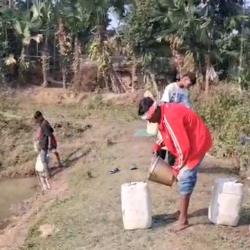
In the Bundelkhand area, with its high levels of poverty, many small and marginal farmers are indebted both to moneylenders and government banks. As the weather gets hotter, the chances of paying back loans become difficult, leading to stress and in some extreme cases, suicides. The growing water scarcity poses further problems of survival to people and animals alike. Already there have been reports of cattle deaths due to water scarcity in the district. In recent years, the water level has gone down significantly.
The ill effects of climate change can also be seen on women farmers, especially poor women farmers because of their low social and economic status. They also have lesser accessibility to livelihood resources and land holdings.
There is a serious danger of climatic changes (in the form of severe droughts, floods, intense rainfall, and storms) undermining development programmes and millennium development goals aimed at reducing poverty.
Currently India is spending 2.5% of its total GDP on measures to control the adverse impact of climatic change, which is a big amount for any developing nation. sThe zeal of rapid industrialization, deforestation and wilful consumption of natural resources is likely to make the situation worse. Policy makers at the state, regional and national level should take a serious view of the economic, agricultural, health-related and environmental impacts of climate changes.
Amit Dwivedi
(The author is a Special Correspondent to Citizen News Service (CNS). Email: amit@citizen-news.org, website: www.Citizen-News.org)
Floods are the most common annual occurrences in Uttar Pradesh, affecting one or the other part of the state; the most affected being the districts of the eastern U.P.and terai region.
Agriculture in India is very much weather-dependent. It is ironic, then, that a significant percentage of greenhouse-gas emission-come from agriculture. Fossil-fuel intensive agriculture is contributing to the creation of the unpredictable weather conditions which all farmers will need to battle in the not so distant future.
Scientists believe that the fluctuating weather conditions in a state suggest that the state is reeling under climatic chaos. For more than a decade now, the state has been experiencing contrasting extreme weather conditions. Agriculture has been worst affected in Uttar Pradesh by these climatic changes. . A little decrease in temperatures can reduce the production of wheat crops, but help in the growth of paddy. Such changes may often tilt the farmers towards growing one crop at the expense of the other. This would lead to imbalances in crop production.
According to the 2001 census, 62.12 percent of the state’s total workers are engaged in agriculture. UP contributes on an average 21 percent to the national production of foodgrain. With an average annual food grain production of about 42.7 million tons and per capita production of 234 kg, U.P. ranks third highest among major states, and is considered to be a food grain surplus state. Yet the plight of farmers is far from satisfactory.
“Government and development organizations have tried to deal with the situation, but their initiatives have been more relief oriented than solution oriented. Local people have devised their own ways and means to deal with the situation. Their methods are inherently scientific and require no external help or support. These region specific techniques have shaped people’s lifestyles in these regions and strengthened their adaptive capacities,” said Prof. (Dr) Shiraj A Wajih, President, Gorakhpur Environmental Action Group.
According to a ‘Gorakhpur Environmental Action Group, GEAG (www.geagindia.org)’ survey “U.P.’s agriculture is characterized by very small size of land holdings; around 90 percent of the farmers in the state are small and marginal farmers. Some 73.8 percent of the total operational holdings in the state are marginal (below 1.0 ha) and another 15.5 percent holdings are small (between 1 and 2 ha). Due to the preponderance of the small holdings cropping pattern, U.P. agriculture is still largely subsistence oriented.”
He further said that, “We need to strengthen our capacities and capabilities to deal with climatic changes, civil society should be more responsible and sensitive towards nature. Government should make interdepartmental approach and farmer friendly policies. It should not jeopardize agricultural growth in favour of corporate interests. Being one of the most populous geographically diverse state of India , U.P. is more prone to climatic changes.”
In the Bundelkhand area, with its high levels of poverty, many small and marginal farmers are indebted both to moneylenders and government banks. As the weather gets hotter, the chances of paying back loans become difficult, leading to stress and in some extreme cases, suicides. The growing water scarcity poses further problems of survival to people and animals alike. Already there have been reports of cattle deaths due to water scarcity in the district. In recent years, the water level has gone down significantly.
The ill effects of climate change can also be seen on women farmers, especially poor women farmers because of their low social and economic status. They also have lesser accessibility to livelihood resources and land holdings.
There is a serious danger of climatic changes (in the form of severe droughts, floods, intense rainfall, and storms) undermining development programmes and millennium development goals aimed at reducing poverty.
Currently India is spending 2.5% of its total GDP on measures to control the adverse impact of climatic change, which is a big amount for any developing nation. sThe zeal of rapid industrialization, deforestation and wilful consumption of natural resources is likely to make the situation worse. Policy makers at the state, regional and national level should take a serious view of the economic, agricultural, health-related and environmental impacts of climate changes.
Amit Dwivedi
(The author is a Special Correspondent to Citizen News Service (CNS). Email: amit@citizen-news.org, website: www.Citizen-News.org)
- 12600 reads






Add new comment