
Skip to content Skip to navigation

Remembering Panditji

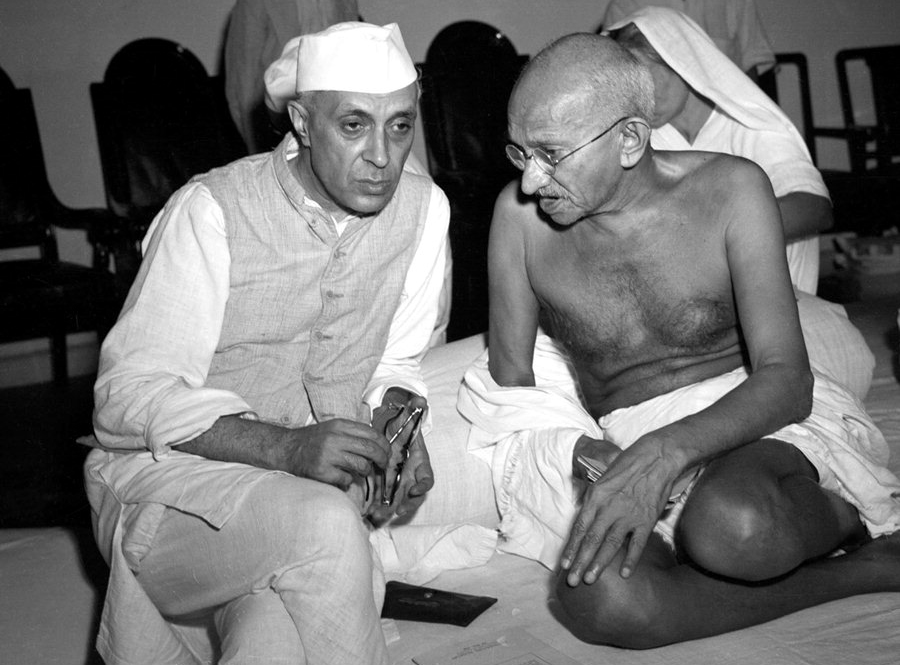
Forty-four years ago on May 27 the first Prime Minister of India died in harness. About Pandit Jawaharlal Nehru, Maulana Abul Kalam Azad wrote in his autobiography: ‘Jawaharlal asked me in despair, what other alternative there was to accepting partition?……..I told Jawaharlal that I could not accept his views.’ Azad added: ‘The Muslim League had accepted the Cabinet Mission Plan, and a satisfactory solution of the Indian problems seemed in sight. Unfortunately the position changed and Mr. Jinnah got a chance of withdrawing from the League’s earlier acceptance of the Plan…… I warned Jawaharlal that history would not forgive us if we agreed to partition. The verdict would then be that India was divided as much by the Muslim League as by the Congress.’ Partition was then inevitable.

In the 1946 July election of Congress President, Maulana Azad would not accept the high office. He desired unanimous election. The contest meant fighting over the opposite issues: Cabinet Mission Plan or Mountbatten Plan? As Vallabhbhai was adamant and would not withdraw, Azad withdrew himself. In my view Azad should not have withdrawn. In the contest he was sure to be re-elected. His was an error of judgment, nay his life’s blunder. The course of history would have been otherwise. There would have been no partition.

The majority in Congress was for the Poona Formula and Meerut Congress resolution of November 1946 – the ‘Congress Formula’ vis-a-vis Cabinet Mission Plan, and strongly against partition. Azad’s Working Committee would have given an altogether different course to the events. Maulana later confessed his error. India as a whole was in no mood to accept partition. So Vallabhbhai found slender support in the Congress. There was confusion – a deadlock. The Congress was caught on the horns of dilemma. Patel had no chance. At the end Jawaharlal was found to be the missing link. He was unanimously elected July 22, 1946. This weak link soon broke down.

I am tempted to ask, why Jawaharlal, who always soared high and who was a staunch, uncompromising opponent of partition of India up to the last, at last succumbed to Mountbatten? Thou too, Brutus!……Nehru did not hold Patel’s view; on the contrary, he was radically opposed to it. In fact, Nehru admitted that ‘Partition was wrong’, but he felt that it was ‘inevitable’, and that ‘it would be wisdom not to oppose what was bound to happen’, and that ‘it would not be wisdom to oppose Lord Mountbatten on this issue’! Jawaharlal accepted defeat, surrendered totally. He ‘believed’ that his friends, the Mountbattens ‘acted in India’s interests as zealously as any India could have done’, so wrote Allen Andrews under the caption, ‘The Fantastic Mountbattens’.

My own reading is: Jawaharlal Nehru might have pleaded that, in the then compelling circumstances ‘individuals did not count’; no ‘static’ thinking would do; ‘force of rapid events’ were compelling; the Congress must take ‘dynamic decision’ in the exigency of the situation that developed; etc. That was all playing to the gallery. But the fact remains that he completely succumbed to the overtures of Mountbatten. And, as a very shrewd politician that he was, he foresaw that it was ‘wisdom’ not to range himself against Patel, the coming hero of partition and therefore to be the sole leader of Congress as soon as partition became a fait accompli: A battle for leadership! In power politics ‘wisdom’ is dictated by majority of votes. Jawaharlal Nehru was after all a ‘democratic leader’! It is an open secret that this battle of leadership and wits between Nehru and Patel continued ad nauseam until the latter made his journey to the ‘bourne from which no traveller ever returns’. Behold, the partition resolution of June 14, 1947, was passed in the A.I.C.C. – the last resolution in pre-independence Congress, by 29 votes for Patel-cum-Nehru and 15 against! (My father, Maulana M. Tayyebulla, Assam Congress President voted ‘against’.) Too many abstentions and absentees….

With all the weaknesses that every political leader has, Panditji remains the most respected, loved, adored and remembered Prime Minister.

Comments

nayan's picture

Nehru was responsible for partition of India. He was selfish and power hungry.

Pages

Add new comment

Other Contents by Author

Please contact editor@assamtimes.org to know how you can join us fighting corruption. We will guarantee your safety.
The proposed ULFA-Government peace talks seems to have crossed a major hurdle when ULFA chairman Arabinda Rajkhowa has been released after he procured bail from a local TADA court in Guwaahti. The bail formalities have been cleared by Rajkhowa's family members on Friday. Rajiv Rajkonwar popularly known as Arabinda Rajkhowa left the Guwahati Central Jail on Saturday at around 8-30 in the morning and left straightly for Tezpur where me visited his senior colleagues including publicity secretary Mithinga Daimary who accompanied him to Tezpur. Before leaving for Tezpur, Rajkhowa denied the reports of vertical split in ULFA on the question of talks with the govenrment. He said he would be...
Three veteran film personalities have joined the ruling Congress in Assam four months ahead of the Assembly polls. Three film actors are Nripon Goswami, Indra Bonia and Dinesh Das. They formally joined the party at a function in Rajiv Bhawan on Wednesday along with film producer Chitra Patowary, and three retired IAS officers. Talking to reporters all they said that want Congress to retain Dispur this time also. Goswami, is a strong contender for Tezpur Assembly seat where the Opposition AGP is set to field its former president Brindabon Goswami. Party sources told Assam Times that that Chief Minister Tarun Gogoi and APCC president Bhubneswar Kalita is trying to rope in more and more...
The proposed ULFA-government talks gets a major boost when a TADA court in Guwahati has granted bail to the outfit's chairman Arabinda Rajkhowa on Wednesday. Same procedure awaits finance secretary Chitrabon Hazarika and foreign secretary Sashadhar Chaudhury. The duo are also expected to be granted bail in a day or two. The bail for Rajkhowa was expected as the government refused to oppose the bail plea in the light of its decision to facilitate the release of the ULFA top guns on bail. The TADA court pronounced its final judgment on Wednesday two days after the hoe department submitted a fresh affidavit before the court raising no objection to the bail plea moved by the ULFA chairman...
It's an end of the wait. A local TADA court in Guwahati has granted bail to ULFA chairman Arabinda Rajkhowa on Wednesday. Rajkhowa is likley to be released from Guwahati Central Jail on Thursday where he has been languishing for the last one year. The court, however, has passed a slew of strictures for the ULFA chief to be followed. The court has asked Rajkhowa not to leave the country without prior permission. He was further asked not to misuse the bail granted to him. The bail was imminent as the Assam government refused to raise any objection in view of its earlier decision to facilitate their release on bail. The government decided not to oppose thier bail pleas to help them...
The 63rd foundation day of Assam Tea Tribes Student Association (ATTASU) will be held in Nazira on December 28.The organisation was formed in December 28, 1948. The event will centrally be observed at Nazira play ground. A reception committee was already formed under the chairmanship of Dr. Probin Konwar.
A Guwahati TADA court on Wednesday reserved the final judgment on ULFA chief Arabinda Rajkhowa's bail petitions to Friday. The decision was taken in view of some legal procedures as the petition surfaced on Monday at the TADA court. The bail was almost sure when the government refused to raise any objection. Talking to reporters at the Kamrup CJM court premsies Rajkhowa said that the talks with the government soon. His remark assumes significance hours before Chief Minister Tarun Gogoi announced that the preprations for holding talks with ULFA was on right direction.
Altogether 3 hardcore NDFB militants were arrested by the police in East Kameng district bordering Assam on Wednesday. The trio are suspected to be involved in the murder of eight Arunachal Pradesh government employees on November 9. Thesy have been identified as Birbal Islari, Manshing Basumatary and Tasam Tasa, the arrested have been handed over to Sonitpur district police. According to reports, an AK-56 rifle, two pistols and 100 rounds of live ammunition were recovered from their possession.