

Myanmar's deepening crisis leaves millions displaced and without hope
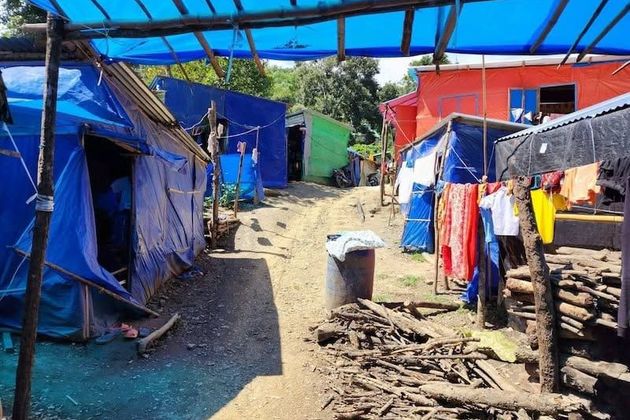
GUWAHATI, July 4, 2026 — When the world observed World Refugee Day on June 20, Myanmar's humanitarian crisis once again came into sharp focus. The military-controlled regime in Naypyitaw has been widely blamed for creating one of the world's largest refugee and displacement crises, with millions forced to flee conflict, persecution and economic hardship.
According to the UN High Commissioner for Refugees (UNHCR), more than one million Myanmar nationals have fled to neighbouring countries, including Bangladesh, Thailand and India's northeastern states of Manipur and Mizoram. An estimated 3.7 million people remain internally displaced, many living in conflict-hit border regions with limited access to food, healthcare and shelter. Nearly 80 per cent of Myanmar's population of around 55 million is estimated to be living in poverty.
The crisis has worsened since the military coup of February 1, 2021, when the elected government led by Daw Aung San Suu Kyi was overthrown by the armed forces under Min Aung Hlaing. Since then, military operations, including airstrikes, village burnings and targeted attacks, have forced hundreds of communities to flee their homes.
Although Hlaing, who assumed the presidency following the disputed elections held in late 2025 and early 2026, has projected an image of stability during recent visits to India and China, conditions inside Myanmar remain dire. Analysts note that strategic projects, including the Kaladan Multi-Modal Transit Transport Project and the India-Myanmar-Thailand Trilateral Highway, have continued to shape regional diplomatic engagement despite the ongoing conflict.
Reports indicate that the military now exercises effective control over less than one-third of Myanmar's territory, while ethnic resistance organisations and People's Defence Forces administer large areas. Much of the remaining territory continues to witness intense fighting.
The conflict has also transformed Myanmar into one of the world's most violent conflict zones. According to the Armed Conflict Location & Event Data (ACLED), more than 100,000 people have been killed since the 2021 coup, with over 1,000 armed groups now involved in the conflict. The organisation has ranked Myanmar among the world's most conflict-affected regions.
The humanitarian consequences continue to mount. The UN High Commissioner for Human Rights has reported that civilians in Rakhine State and central Myanmar remain among the worst affected, with repeated military airstrikes targeting villages and, in some cases, schools, hospitals and camps sheltering displaced people.
Education has suffered a major setback. More than six million children and young people are expected to remain out of school during the 2026-27 academic year, leaving nearly half of the country's school-age population without formal education. The healthcare system has also been severely weakened following attacks on medical facilities and the closure of several private hospitals.
Myanmar's media landscape has similarly come under sustained pressure. According to the Geneva-based Press Emblem Campaign (PEC), at least 215 media workers have faced persecution since the coup, with more than 15 journalists still imprisoned. The organisation has also reported that the operating licences of three additional media outlets were recently cancelled, bringing the number of media organisations facing legal action to 97.
Meanwhile, the National Unity Government (NUG), formed by lawmakers removed from office after the coup, has urged international investors to ensure transparency, accountability and respect for local communities. It has maintained that agreements entered into with the military administration lack democratic legitimacy and could carry legal and financial risks. The NUG has also reiterated its demand for the unconditional release of Aung San Suu Kyi and all other political prisoners.
More than five years after the military takeover, Myanmar remains engulfed in political instability, armed conflict and a worsening humanitarian emergency, with little indication of an early resolution.
Comments (0)
No comments yet. Be the first to share your thoughts.
Leave a Comment