

Flood-Hit Nazira Villages Demand Ban on Stone Mining Along Dikhow River

NAZIRA, August 6, 2026 — Anger is mounting across several flood-ravaged villages in Nazira Co-District, where residents have demanded an immediate and complete ban on stone mining along the Dikhow River and its adjoining areas, alleging that unchecked extraction has worsened the impact of the recent floods.
People from Bihubar, Ogurijan, Nepali Khuti, Shiloni, Santak, Laxmijan, Borshil and Bamunpukhuri said they would continue their protest until mining activities are stopped. Many flood survivors, who lost homes, farmland, livestock and family members in the disaster, said they feared similar tragedies unless stricter action is taken against illegal mining.
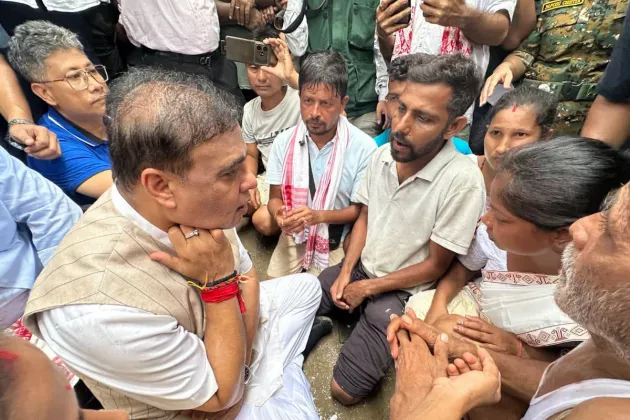
The demand follows remarks attributed to Assam Chief Minister Himanta Biswa Sarma during his recent visit to the flood-hit area, in which he reportedly said that many local people depend on sand and stone mining for their livelihood, with only one person opposing the activity.
Residents strongly disputed that claim.
"We cannot accept such remarks. Most of us are not involved in mining. We earn our living through farming, vegetable cultivation, driving, dairy farming and other occupations. Mining benefits only a small section of people," a resident said.
Emotions ran high during the Chief Minister's visit to Nepali Khuti earlier this week when a young girl, overcome with emotion, appealed to him to stop illegal stone mining. The moment drew widespread attention among those present and has since become a symbol of the community's frustration.
Several local organisations have also alleged that large-scale stone mining in Bihubar and coal mining across the Nagaland border have contributed to environmental degradation in the Dikhow river basin. They argue that these activities have altered the river system and aggravated flooding. These allegations have not been independently verified.
The recent Dikhow flood, described by many residents as the worst in living memory, devastated large parts of the Assam-Nagaland border area. Nepali Khuti village was among the worst affected, with most houses swept away or severely damaged. Many families from the Nepali community, who depended on dairy farming and agriculture, lost their livestock and primary source of income.
Although floodwaters have receded, recovery remains slow. In some places, decomposing animal carcasses remain buried beneath thick layers of silt, raising concerns about sanitation and public health. Residents say the disaster has also left deep psychological scars, particularly among children.
"The mining of stone and coal has destroyed us," the young girl told the Chief Minister during his visit, a remark that many villagers say reflects the feelings of the wider community.
As calls for accountability grow louder, residents are urging the government to investigate the environmental impact of mining activities, enforce existing regulations, and take measures to reduce the risk of similar disasters in the future.
Comments (0)
No comments yet. Be the first to share your thoughts.
Leave a Comment