Skip to content Skip to navigation

Essays on Srimanta Sankaradeva

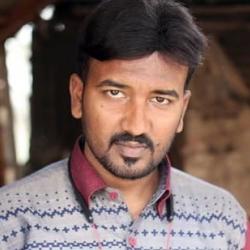
Essays on Srimanta Sankaradeva authored by Dr Sanjib Kumar Borkakoti is a valuable addition to the works on Indian culture and philosophy. The author has carried out extensive research on Assamese hagiographies, particularly Sankaradeva and different aspects of Sankari culture. The book contains several analytical articles, a few of them that have already been published in different journals or websites. Dr Borkakoti has analysed in this book the significant impact left by the saint litterateur Srimanta Sankaradeva on the socio-cultural as well as economic milieu of Assam. How the medieval polymath influenced the society from literature to culture to economy is exhaustively analysed in this lucid book. Right from economic sustenance of the Sattra institution to the Vivartanavada philosophy of Srimanta Sankaradeva, everything is analysed in a compact manner in these essays. These articles deal with the Vaishnavite saint's contributions, which are quite relevant for knowing Assam's remarkable contributions in the spiritual and literary ecosystems, says Dr Borkakoti. He has successfully described the prominent role of the saint litterateur in shaping the socio-cultural fabric of Assam.

The author has shown how the Sattra institution created by Srimanta Sankaradeva stands out as a unique model of self-sufficiency. He has written elaborately on the economic sustenance of these Sattras based on his own field work covering as many as forty eight Sattras and Thans in different districts of Assam. The author also prescribes viable economic activities for the Sattras so that the currently existing Sattras can sustain themselves in a befitting manner for the present era. Thus it is not only a study, but also a great plan that the author has presented. It may be mentioned that the units set up by the saint himself were known as Than, those set up later as Sattra. This and many such gems of knowledge can be found in these essays by Dr Borkakoti.

The book also elaborates the contributions of Srimanta Sankaradeva in areas like feminism, aesthetics, philosophy etc. The Vivartanavada philosophy of the saint is explained with all its features in a valuable essay. The author makes a comparison with other Sanātana Hindu philosophies in his book. He also shows how Srimanta Sankaradeva succeeded in bringing the two parallel paths of wisdom and devotion together. Very few people knew for instance that he was the first to say that Ishwara and Brahma are the same. Spinoza’s philosophy echoed the same after several centuries. Such pathbreaking pronouncements in Indian philosophy needs to be highlighted, to say the least. Dr Borkakoti has done exactly that in his essays. This will go a long way in establishing Srimanta Sankaradeva among the pantheon of saints in India.

Srimanta Sankaradeva was also a pioneer of the drama movement in India, being the first playwright in all modern Indian languages. His plays are called Ankiya plays. He created the unique costume, ornament, make-up etc of the actors worn in his plays. It is hard to find such multi-talented person on earth. The author has elaborated the Aharya of these plays in one of the essays in this book. The author being involved in promotion of these works himself, as he heads an organisation named ‘Society for Srimanta Sankaradeva’, the readers get to know the authentic staff about this culture.

Another fascinating area covered in the book is the comparative study between the ‘Eka Sarana Nama Dharma’ of Srimanta Sankaradeva and Sikhism of Guru Nanak. There are numerous common socio-economic common elements, which have been pointed out by the author. He says that Guru Nanak had spiritual guidance from Srimanta Sankaradeva; in fact Guru Nanak came to Assam to meet the polymath during the first Udasi. This is a great discovery, which will go a long way in establishing Srimanta Sankaradeva with his due status among the medieval luminaries of India.

The author has analysed the works of feminism as reflected in the writings of Srimanta Sankaradeva. The polymath departed from the original version of Ramayana in his Assamese transcreation; he presented his own version of Sita, a revolutionary Sita, who spoke with vengeance against her banishment by Rama. Srimanta Sankaradeva’s Sita is very different from Valmiki’s Sita, the analysis of which itself is sufficient to establish the polymath as a pioneer of feminism. His Sita says that she would never again call herself as Rama’s wife. Such utterance was unheard of in the then Indian literature. Clearly the works of the saint litterateur belonged to a different genre. The author rues that strangely very little is known about Srimanta Sankaradeva outside Assam and his pivotal contributions have been almost forgotten for lack of research. He says that Srimanta Sankaradeva should be reckoned as an unusual genius among all saints of India.


Dr Borkakoti successfully presents a Pan-Indian role of Srimanta Sankaradeva in his book. He showed how the influence of the saint litterateur spread to other regions of India. These include the eulogy of Sant Kabir, the social structure of Odisha influenced by the saint, the Yatra movement of Bengal derived from the Ankiya plays of Srimanta Sankaradeva etc. Certainly these essays by Dr Borkakoti will go far in throwing light on the formative years of many regional cultures of India. ‘Essays on Srimanta Sankaradeva’ is therefore a valuable addition to the study of Indian literature and culture and philosophy.

Add new comment

Other Contents by Author

In a landmark judgment, the National Consumer Disputes Redressal Commission (NCDRC) has held Guwahati Neurological Research Centre (GNRC) Hospital and three of its doctors liable for gross medical negligence, resulting in severe and permanent disability to Takam James, a young man from Arunachal Pradesh. The complaint (Consumer Complaint No. 581 of 2014) was filed against Dr. Navanil Barua, Dr. Bivan Bihari Dey, and Dr. Monoj Agarwal, who were accused of negligent treatment following a motorbike accident that left Mr. James with severe brain injuries. During his treatment at GNRC, multiple procedural lapses occurred, including an undocumented and improperly conducted tracheostomy that...
In a major boost for Bodo-medium education in Assam, the state government has announced the promotion of 25 Middle English (ME) schools to model high schools. The decision was made during a high-level review meeting chaired by Education Minister Dr. Ranoj Pegu at Janata Bhawan on Wednesday. The meeting reviewed the progress of key schemes under the Department of Primary and Secondary Education’s 2025–26 budget. Key initiatives discussed included distribution of bicycles to Class 9 students, progress under the Chief Minister’s Millionaire Scheme, implementation of free admissions for school students, assessment of infrastructure and academic quality in newly upgraded higher secondary...
A section of a brick guard wall along the Bahini River in the Beltola Bazar area collapsed on Thursday afternoon, resulting in the death of one person and injuries to three others. The incident occurred around 2 pm when the victims, all petty traders, were seated near the wall. The deceased has been identified as 50-year-old Anju Rongpi, a resident of Khetri Borbitoli village in Kamrup (Metro) district. She was seriously injured in the collapse and later succumbed to her injuries at Gauhati Medical College and Hospital (GMCH). The three injured individuals have been identified as Muktar Deory (60) from 2 No. Chilaguti in Baksa, Laifan Boro (46) from Dangar Makha in Baksa, and Bhogila...
Guwahati: The Baloch-descendants have urged the United Nations to recognise Balochistan as an independent nation out of Pakistan.  In a letter, addressed to UN secretary-general António Guterres, the  Baloch Welfare Association in India, demanded to support the Baloch nation's legitimate right to self-determination, as enshrined in the UN charter and international law. “We urge the UN to take immediate and serious action on the humanitarian crisis in Balochistan. Recognizing an independent Balochistan becomes  an essential initiative to bring a lasting peace in the region, end decades of suffering and support the people whose voices have been silenced for a long period,”...
In recent years, increasing attention has been paid to the impact of parasites on human health. Dr. Lee Merritt, a seasoned medical professional, has spoken publicly about a detox protocol she personally follows to manage parasitic infections. While not intended as a treatment recommendation, her approach has gained interest for its clarity and practicality. Introduction Dr. Merritt emphasizes from the outset that she is not prescribing or advising anyone to follow her routine. “I’ve been asked about the anti-parasite protocol I personally use,” she says. “Let me be clear—I’m not telling anyone what to do. This is not a treatment recommendation; it’s simply the protocol I use for my...
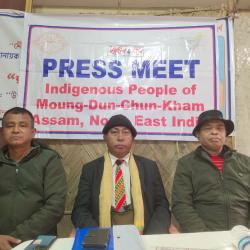
Naam-Phai Village, Tinsukia | April 22, 2026: A round table meeting was held today among several indigenous organizations at Naam-Phai village under Margherita Sub-division of Tinsukia district to discuss the protection of land rights for indigenous Assamese communities residing in the Tirap Tribal Belt and Block. The meeting brought together members of the Indigenous Peoples of Moung-Dun-Chun-Kham (Assam, North East India), All Man-Tai Speaking Students’ Union, Tirap Autonomous District Council Demand Committee, and the Tirap Mouza Indigenous Tai-Ahom Land Rights Protection Committee. The participants unanimously decided to initiate further actions to safeguard the land rights of...
Despite repeated claims by Assam Chief Minister Himanta Biswa Sarma and other BJP ministers that the long-standing inter-state border dispute with Nagaland has been resolved, fresh tensions have erupted along the border, particularly in the Merapani Seed Farm area under Golaghat district. Local Assamese residents continue to live in fear, alleging that the state government, administration, and police remain silent and inactive. The epicenter of the recent unrest is the Merapani Seed Farm, a 1300-acre tract of land well within Assam’s geographical territory. On 10 April, thousands of Assamese citizens rallied at Merapani, staging an intense protest demanding protection of Assamese land...
A shocking case of brutal violence has rocked the Nambor Nadi Tea Estate area under Borpathar Police Station in Assam’s Bokajan subdivision. An unidentified group of assailants allegedly attacked a family late last night, leaving three children grievously injured and their parents dead in a chilling act of cruelty. According to local sources, the attack took place at the home of Jullo Munda in the Munda Basti area of the tea estate. The assailants severely injured Jullo’s two daughters — Sita Munda (13) and Meera Munda (11) — as well as his 9-year-old son, Shankar Munda. In a horrifying turn of events, the attackers then abducted Jullo Munda and his wife Panchami Munda, as confirmed by...
The Aoling festival, the traditional New Year celebration of the Ao Naga tribe, has brought vibrant energy to the Naga village of Hahchar in Shivsagar. The villagers, whose ancestors settled here during the reign of Ahom King Gadadhar Singha in 1775, continue to preserve their rich cultural heritage with great enthusiasm. The Aoling festival, observed annually in the first week of April, marks the arrival of spring and invokes blessings for a prosperous agricultural season. The festivities span several days, filled with rituals, communal feasts, and cultural performances. In the first three days, villagers engage in traditional activities such as weaving ethnic attire, collecting...
Assam has emerged as the state with the lowest life expectancy in India, averaging just 66 years, according to recent data from the National Family Health Survey (NFHS-5). This figure not only falls below the national average of approximately 69 years but also trails behind other Northeastern states, with neighboring Nagaland boasting a life expectancy exceeding 75 years. Health experts attribute Assam's lagging life expectancy to a combination of factors, including air pollution, poor dietary habits, high blood pressure, smoking, and environmental hazards. Dr. Rahul Mehra, UNESCO Chair Representative for Global Health and Education, emphasized the urgency of integrating health education...