

COP31: Climate Action Beyond Promises
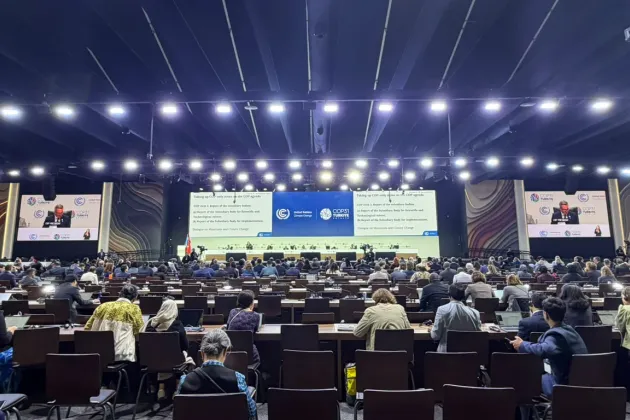

The 31st Conference of the Parties to the United Nations Framework Convention on Climate Change (COP31), held in Antalya, Türkiye, brought together governments, negotiators, climate experts, international organisations, civil society groups, Indigenous Peoples, youth and communities at a critical moment in the global climate crisis.
The conference concluded on November 22 without consensus on its proposed overarching political agreement, the Antalya Pact. Although negotiations advanced on several specific agenda items, the failure to adopt the main political decision exposed continuing divisions over fossil fuels, climate finance and the responsibilities of countries in addressing climate change.
As climate impacts intensify across the world, the discussions in Antalya have once again highlighted the urgent need to move beyond declarations and promises towards meaningful, adequately financed and accountable climate action.
COP31 took place against a backdrop of growing climate emergencies, including devastating floods, prolonged droughts, heatwaves, forest fires, coastal erosion, biodiversity loss and disruptions to food systems and livelihoods. These are no longer distant predictions. They are everyday realities for millions of people, particularly those who depend on agriculture, forests, rivers, fisheries and other natural resources for their survival.
For vulnerable communities, climate change is not simply an environmental problem. It is also a crisis of livelihoods, dignity, rights, inequality and survival.
The success of the global climate process must therefore be measured not only by agreements reached in negotiation rooms, but also by whether decisions translate into tangible improvements in the lives of communities already experiencing the consequences of climate change.
The Antalya Outcome: Progress Amid Political Differences
The outcome of COP31 reflects both the possibilities and limitations of international climate negotiations.
One of the most contentious issues was the absence of a clear commitment in the proposed Antalya Pact to transition away from fossil fuels. Despite growing scientific evidence and demands from climate-vulnerable countries, the draft did not explicitly reaffirm the commitment made at COP28 in Dubai to transition away from fossil fuels.
This became a major point of disagreement, with the European Union, the United Kingdom and several climate-vulnerable countries objecting to the proposed text. The lack of agreement on the overall political decision was particularly significant because the Antalya Pact was expected to provide the main political direction for the conference.
The proposed pact also included a target of increasing electricity's share of global final energy consumption to 35 per cent by 2035. However, this remained part of the unadopted draft rather than an agreed international commitment.
Although decisions on several specific agenda items and technical matters were taken forward, the failure to secure consensus on the main political text exposed the distance between political ambition and collective action.
This should not be interpreted as the end of international climate cooperation. Rather, it demonstrates the growing pressures on multilateral negotiations at a time when global solidarity is more important than ever.
Climate change does not respect political borders or national interests. Its impacts are interconnected, and the response must also be collective, fair and guided by shared responsibility.
The disagreements in Antalya raise an important question about the credibility of the global climate process: can governments maintain the trust of communities and countries most affected by climate change when negotiations fail to deliver decisions that match the scale of the crisis?
The way forward requires governments to strengthen the implementation of commitments under the Paris Agreement, particularly its principles of equity, common but differentiated responsibilities and respective capabilities.
Climate Finance: From Commitments to Accessible Resources
Climate finance remained one of the most important issues in the COP31 negotiations. Developing countries continue to face a substantial gap between the resources required to address climate change and the financial support they receive.
This gap is particularly evident in communities experiencing repeated disasters, where recovery from one climate event is often interrupted by another.
For countries like India, and climate-sensitive regions such as Assam and Northeast India, climate finance is not merely a matter of international negotiations or national policy. It is directly connected to protecting livelihoods, agriculture, housing, infrastructure, public health, water security and local community resilience.
The challenge is not only to mobilise more climate finance but also to ensure that it is accessible, predictable and responsive to local needs.
Climate finance must recognise the importance of locally led action. Resources should reach communities, local institutions and organisations working on the ground rather than remain concentrated in larger institutions or complicated funding systems.
There is also a need to expand grant-based support, particularly for vulnerable countries and communities already struggling with poverty, debt and repeated climate-related losses.
The discussions in Antalya reinforce the need to bridge the gap between financial announcements and actual delivery. Climate finance should not be measured only by the amount promised or mobilised, but also by how effectively it protects vulnerable people, livelihoods, ecosystems and essential services.
Adaptation finance requires particular attention. Communities facing floods, riverbank erosion, droughts, landslides, extreme heat and agricultural losses need long-term investment in resilience, not merely short-term relief after disasters.
Investment in community-based early warning systems, climate-resilient infrastructure, nature-based solutions, sustainable agriculture, water management and disaster preparedness can reduce future losses and protect development gains.
Climate finance must ultimately help reduce inequality and strengthen resilience rather than create another system in which the most vulnerable communities are left behind.
Loss and Damage, Adaptation and the Humanitarian Dimension of Climate Change
The increasing frequency and severity of climate-related disasters have made loss and damage one of the most urgent issues in global climate policy.
Floods, cyclones, landslides, droughts, extreme heat and slow-onset disasters are causing widespread damage to homes, infrastructure, livelihoods, ecosystems and cultural heritage. In many cases, communities that have contributed very little to global greenhouse gas emissions face some of the greatest consequences.
For humanitarian organisations and development practitioners, climate change is also transforming the nature of humanitarian action.
Disaster response can no longer be viewed as an activity that begins after a flood or cyclone and ends with the distribution of relief materials. Climate-related emergencies require continuous engagement, including preparedness, anticipatory action, emergency response, protection, recovery, rehabilitation and long-term resilience-building.
This is particularly important in flood-prone regions such as Assam, where communities face repeated flooding, riverbank erosion, displacement, agricultural losses and damage to public infrastructure.
In many riverine areas, families lose their land and livelihoods repeatedly, forcing them into cycles of displacement, debt, migration and insecurity. Climate impacts also deepen existing inequalities and disproportionately affect women, children, older persons, persons with disabilities, Indigenous Peoples, marginal farmers and landless households.
Climate negotiations must therefore strengthen the connection between climate policy and humanitarian action.
Loss and damage funding should be accessible to affected countries and communities through simpler procedures, transparent allocation, appropriate safeguards and timely support. It must recognise both economic and non-economic losses, including the loss of cultural identity, traditional knowledge, community relationships, biodiversity and ancestral landscapes.
Adaptation must also be a community-led process. Communities possess knowledge, experience and practices developed over generations in response to environmental changes. Indigenous knowledge, traditional farming practices, community-managed natural resources and local disaster preparedness systems must be recognised as essential components of climate adaptation.
The global climate process needs an integrated approach in which climate adaptation, disaster risk reduction, humanitarian response and development planning work together.
Resilience cannot be built through isolated projects. It requires sustained investment in communities, institutions, ecosystems and local capacities.
Transitioning Towards a Just, Inclusive and Sustainable Future
The energy transition, reduction of carbon emissions and transformation of production and consumption systems remain central to the global climate agenda.
COP31 discussions and initiatives in Antalya highlighted the importance of electrification, renewable energy, energy efficiency, sustainable buildings, waste management and technological innovation.
However, the proposed energy transition must be guided by justice, inclusion and equality. A transition that focuses exclusively on technology without considering its social, economic and environmental implications risks deepening existing inequalities.
Workers, small producers, Indigenous communities, rural populations and people whose livelihoods depend on climate-sensitive sectors must have a meaningful role in decision-making.
A just transition must go beyond replacing one energy source with another. It must address employment, social protection, livelihood security, affordable energy, skills development, community participation and the fair distribution of benefits.
The transition should create opportunities for people rather than introduce new challenges and vulnerabilities.
For communities in Assam and Northeast India, the transition must also take into account the region's sensitive ecology, rich biodiversity, Indigenous knowledge, rivers, forests, agricultural landscapes and traditional livelihoods.
Climate solutions should not create new development pressures in the name of green growth.
Agroecology, climate-resilient agriculture, Indigenous seed conservation, community forest management, sustainable livelihoods, ecosystem restoration and nature-based solutions can play important roles in building resilient communities, protecting biodiversity and strengthening local economies.
Environmental sustainability and social justice are closely connected. Development must respect nature, protect community rights and ensure that the costs and benefits of the transition are shared fairly.
From Antalya to the Ground: The Road Ahead
The discussions at COP31 should be seen as part of the continuing global effort to translate climate commitments into practical action.
While the failure to adopt the Antalya Pact represents a setback for collective political ambition, it also reinforces the importance of international solidarity and action beyond negotiation spaces.
The priorities for the coming years must be clear: strengthening climate ambition in line with scientific evidence and the 1.5°C goal, accelerating a fair transition away from fossil fuels, increasing adaptation finance for vulnerable countries and communities, and making loss and damage funding accessible, adequate and operational.
Equally important are locally led adaptation, the recognition and protection of Indigenous Peoples' rights, investment in nature-based solutions, stronger humanitarian preparedness, and transparency and accountability in implementing climate commitments and financing.
Climate policies and financing mechanisms must be informed by the realities of communities living across the Brahmaputra and other river basins, mountain areas, forests, tea-growing regions and agricultural landscapes.
Their voices must not remain at the margins of global discussions. Their experiences, priorities, traditional knowledge and aspirations are essential to shaping climate policies, strengthening resilience and building a just and sustainable future.
For Assam and Northeast India, this means connecting international climate commitments with practical interventions at the village and community levels. Strengthening local institutions, supporting community-based preparedness, promoting sustainable livelihoods and investing in ecosystem restoration must become integral parts of the regional climate response.
The Measure of Climate Action Is in People's Lives
COP31 in Antalya demonstrated that the world continues to face difficult political choices in responding to climate change.
The disagreements over the proposed Antalya Pact, the absence of an overall political agreement and continuing differences over fossil fuels, finance and adaptation highlight the distance between global commitments and the action required by science and communities.
However, climate action cannot be measured solely by the success or failure of a single conference. Its real value lies in the policies governments implement, the resources they provide, the ecosystems they protect, the communities they empower and the lives they safeguard.
The climate crisis demands a shift from promises to accountability, from fragmented interventions to collective action, and from externally driven development to locally led, inclusive and rights-based solutions.
Climate justice must guide every decision that affects people, nature and the future of our planet.
For communities already affected by disasters and climate change, the global climate process must deliver more than political statements. It must provide protection, resources, dignity and opportunities to rebuild lives and secure a sustainable future.
The journey from Antalya must continue in our villages, river basins, forests, agricultural fields, community institutions and public policy spaces.
Climate action is the responsibility of governments, institutions, civil society, businesses and citizens alike. But it must begin by listening to those who are already living with the consequences of climate change.
Ultimately, the success of global climate negotiations will depend not only on the words of agreements, but on whether they make a meaningful difference to the lives of people and communities on the frontlines of the climate crisis.
Tirtha Prasad Saikia is the Director of the North-East Affected Area Development Society (NEADS), a grassroots humanitarian and development organisation based in Jorhat, Assam. His work focuses on humanitarian action, disaster risk reduction, climate change, biodiversity conservation, environmental sustainability, sustainable livelihoods, people-centred economic development, agroecology, inclusive governance and community empowerment.
Comments (0)
No comments yet. Be the first to share your thoughts.
Leave a Comment