

A Heartfelt Review of Heart Lamp by Banu Mushtaq — Through the Eyes of a Young Reader

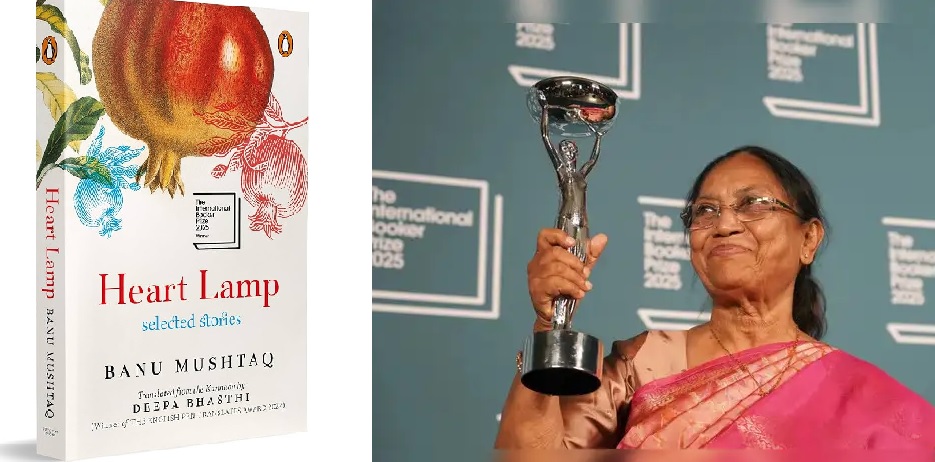
Based on YouTube Review by: Priyanka Saha, English Literature Student, Bangalore.
A day before the world would learn that Heart Lamp by Banu Mushtaq had won the 2025 International Booker Prize, a young voice from Bangalore shared a moving, deeply personal review of the book on YouTube. That voice was Priyanka Saha, a literature student who not only read the book but met the author in person, received a signed copy from both Banu Mushtaq and translator Deep Bashi, and offered her sincere wish that Heart Lamp would win the prize.
Priyanka’s review stands out—not for its technical analysis or literary jargon—but for its vulnerability, clarity, and emotional honesty. Her words are not those of a seasoned critic, but of a reader who has been moved.
"A book unlike any other I’ve read."
Priyanka opens her review holding up the signed copy with quiet pride. For her, Heart Lamp is more than a book—it’s a mirror into the lives of Indian Muslim women and a record of struggles that often remain behind closed doors. Translated from Kannada by Deep Bashi, the book is a collection of short stories that offers an unfiltered look at life in interior Karnataka while simultaneously resonating with women across the world.
Priyanka doesn’t shy away from calling the book an “emotionally heavy” read. The title story, which she highlights in detail, paints the picture of Mahun, a woman betrayed by her husband and abandoned by her family. In Priyanka’s telling, Mahun’s story is not just fiction—it is heartbreakingly real, familiar, and reminiscent of women she has known and admired in her own life.
A Chaotic, Crowded, Real India on the Page
What Priyanka found striking was the narrative style—chaotic, overflowing with characters, sensory details, food, sound, and emotion—much like India itself. She compares this storytelling style to the “crowdedness” of Indian life: not linear, not minimal, but bursting at the seams with meaning. One paragraph, she notes, introduces 12 people at once, forcing her to reread it thrice just to keep track. But this disorientation is part of the magic—drawing readers into the protagonist’s crowded world and, by extension, the author’s lived experience.
Mahun’s Despair: A Woman’s Silent Grief
Priyanka recounts how Mahun, once a bright student, was pulled out of school and married young. Now older, physically worn, and emotionally bruised, she returns to her natal home only to be told she’s overreacting. The family's lack of support is painfully familiar: instead of validating her feelings, they suggest her husband might take a second wife, or worse, abandon her entirely. The quiet cruelty of these scenes struck a deep chord with Priyanka, who reflects on similar stories she’s heard growing up.
She recalls one woman who confided in her during her childhood—a woman married off young to a much older man who abused her. Her story, like Mahun’s, lingered in Priyanka’s mind and resurfaced with full force while reading Heart Lamp. “This book,” she says, “is a little tribute to her.”
What Stories Deserve to Be Told?
Priyanka also shares what Banu Mushtaq said at the book launch—how, early on in her writing journey, she grappled with the question of whose stories to tell. Eventually, Mushtaq chose to write about her own community, her people, and the lives behind veiled windows, kitchen walls, and busy courtyards. In doing so, she illuminated the unseen.
And in reviewing Heart Lamp, Priyanka extends that illumination—passing on the glow to new readers, viewers, and listeners.
"You must not have read anything like this before."
That’s how Priyanka sums up the collection. It’s not just a recommendation; it’s a conviction. She ends her video with a heartfelt invitation: “If you want to read something different, read Heart Lamp.”
On May 28, 2025, the International Booker Prize committee echoed that sentiment by awarding Banu Mushtaq and Deep Bashi the prestigious prize—validating voices like Priyanka’s, who saw the brilliance of the book even before the global spotlight did.
Comments (0)
No comments yet. Be the first to share your thoughts.
Leave a Comment