

Assam Unites for Child Protection: Snehalaya Marks 25 Years of Juvenile Justice Services

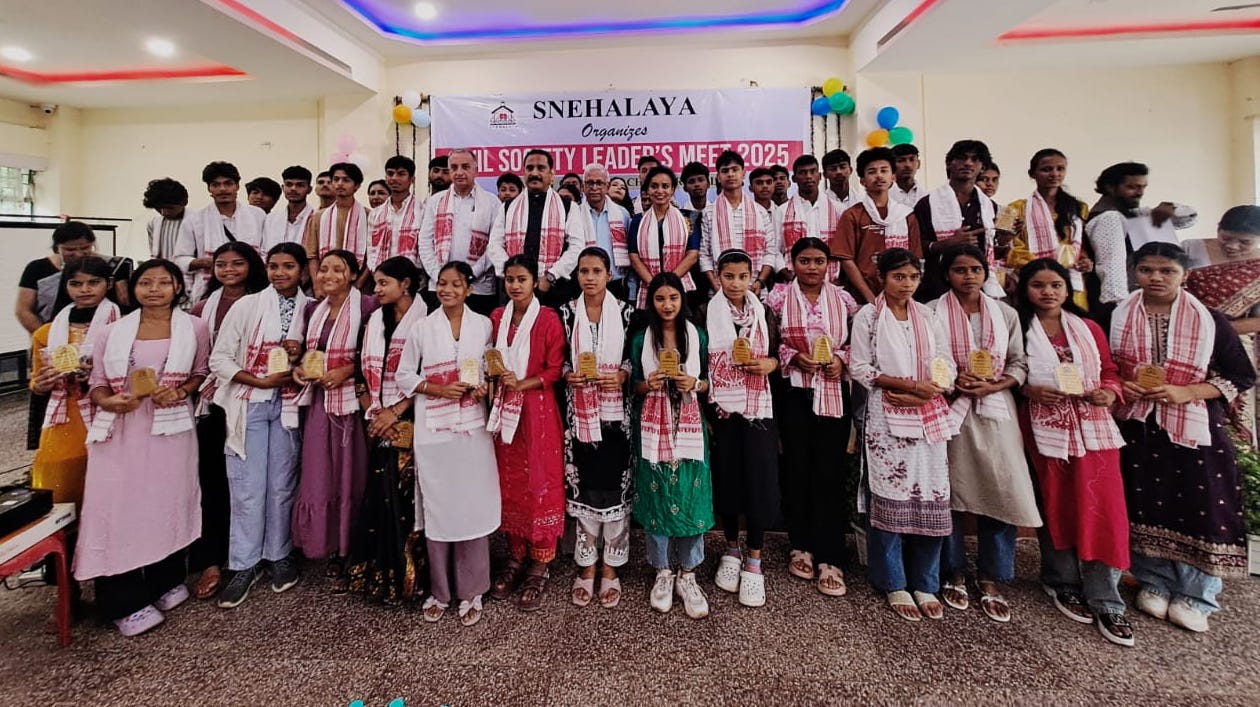
With a renewed commitment to protecting children’s rights, civil society leaders and government representatives gathered at Don Bosco Campus, Guwahati, for a pivotal discussion on child protection in Assam. Organized by Snehalaya, the event held on April 30, marked 25 years of Juvenile Justice Services in India and reinforced collective efforts to make Guwahati a Child-Friendly City.
Assam Child Rights Protection Commission (ASCPCR) Chairperson Dr. Shyamal Prasad Saikia, IPS (Rtd), emphasized the urgency of eradicating child marriage by 2026 and tackling child labor and abuse through unified action.
The event, marking 25 years of Juvenile Justice services in India, was part of Snehalaya’s mission to transform Guwahati into a Child-Friendly City.
Dr. Saikia emphasized the Assam government's commitment, under Chief Minister Shri Himanta Biswa Sarma, to eradicate child marriage in the state by 2026. He also stressed the urgent need to combat child labor and various forms of abuse—physical, emotional, and sexual—through a unified effort.
Salesian Provincial Fr. Sebastian Kurichiel, Head of the Don Bosco Society, and Additional Member Secretary of the Assam State Child Protection Society (ASCPS) Madam Tarali Das,, echoed the necessity of a collaborative approach between government agencies and civil society organizations like Snehalaya, SOS, and other stakeholders.
Snehalaya’s Founder-Director, Salesian Fr. Lukose Cheruvalel, urged everyone to champion child rights across all levels—within families, schools, and administrative structures dedicated to Juvenile Justice services.
In recognition of young achievers, Dr. Saikia felicitated 60 successful High School Leaving Certificate (HSLC) candidates from Snehalaya’s Child-Friendly Guwahati initiative and launched Snehalaya’s Annual Report. The Children of Jyoti Snehalaya added a soulful touch with a prayer dance performance.
Ms. Anamika Sharma provided insights into alternative care systems, including adoption and foster care, to an audience of approximately 150 civil society representatives and NGO leaders. During her session, Ms. Alokita Baruah of Aid Et Action highlighted the shifting focus in Juvenile Justice Services toward family responsibility. She emphasized that institutional care for children should be a last resort, with family and community-based care, such as adoption and foster care, being the norm.
A key outcome of the event was the relaunch of the EKTA Juvenile Justice district-level NGO network, designed to facilitate knowledge exchange and collaboration on best practices. Assam Don Bosco University committed to conducting a study on the educational and socio-economic conditions of children reintegrated with their families over the past two to three years, further strengthening efforts toward holistic child welfare. END
Photo: Dignitaries release the magazine and report of Child Friendly Guwahati.
Comments (0)
No comments yet. Be the first to share your thoughts.
Leave a Comment