

What I Saw After the Dikhow Floods in Nazira
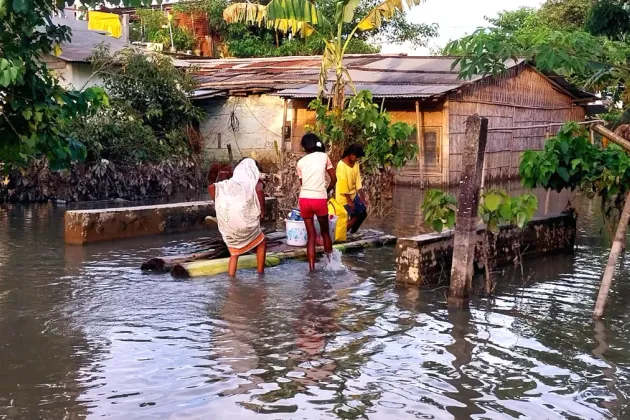

The scenes I witnessed in Nazira after the Dikhow River floods are difficult to forget. Even days after the water began to recede, many villages remained buried under mud and silt. Homes had collapsed, fields were ruined and thousands of people were trying to rebuild their lives with whatever they had left.
In villages such as Santak and Bihubar, I met families who had lost almost everything. Household belongings lay scattered under thick layers of mud. Many residents stood outside damaged homes, unsure of where to begin the task of rebuilding.
People who survived the flood recounted terrifying moments. Several told me they had only minutes to react as the river rose rapidly. Some climbed onto rooftops, others sought refuge on haystacks, while a few clung to electric poles until the water subsided. Almost everyone I spoke to described the same feeling—helplessness in the face of a flood that arrived with extraordinary force.
The devastation extends far beyond a few villages. During my visit, I travelled through Santak, Bihubar, Nepali Khuti, Shiloni, the Dark Cycling area and several other parts of Nazira Co-District. In many places, homes remain uninhabitable, roads are coated with silt and agricultural land has been badly damaged.
One of the most painful sights was the number of families still living beside roads under makeshift shelters. Some continue to share these temporary camps with their surviving livestock. Many told me they were waiting not only for relief but also for a clear plan for rehabilitation.
Everywhere I looked, there were reminders of the flood's force. Cars and motorcycles remained half-buried in mud. Wells and ponds were contaminated. Fields that once sustained families had become stretches of sand and silt.
During my interactions with residents of Bihubar, Ogurijan and Nepali Khuti, many blamed illegal stone mining along the Assam-Nagaland border for worsening the disaster. Whether these allegations are borne out by official investigations is for the authorities to determine. What was unmistakable, however, was the anger and frustration among local people, many of whom believe environmental degradation has made the region increasingly vulnerable to such disasters.
Another issue that struck me was the accumulation of discarded plastic bottles and other waste left behind after relief distribution. Emergency assistance is indispensable, but waste management also deserves attention. Plastic dumped in drains, ponds and water channels could create additional environmental problems if it is not cleared promptly.
The flood has left behind far more than damaged houses. It has disrupted livelihoods, education and the sense of security that communities depend upon. Many families now face months, if not years, of rebuilding their homes and reclaiming their farmland.
The people of Nazira have shown remarkable resilience in the face of overwhelming adversity. But resilience alone cannot rebuild lives. They need sustained rehabilitation, stronger disaster preparedness, environmental accountability and long-term measures that reduce the risk of such devastation recurring.
Comments (0)
No comments yet. Be the first to share your thoughts.
Leave a Comment